
Washington Capital Partners is proud to celebrate Women’s History Month by recognizing women real estate investors! Our exclusive interview features four successful, amazing, and inspirational women real estate investors in the DMV area. With over 25 years of experience and over 500 real estate investments completed, these women have a wealth of stories, struggles, and successes to share.
Real estate investing has historically been a male-dominated industry. However, more women than ever have entered this field in recent years. From fix-and-flips and short-term rentals to wholesaling and long-term investments, women all over the country are finding creative, effective ways to make build careers as real estate investors.
The women featured in this interview offer great advice on how to get started, what to expect, and how to continue to grow. Three of the biggest takeaways from the interview are 1) align yourself with people who are successful in the industry 2) push through adversities and 3) start now learning as much as you can.
Don’t wait for time to free up on your calendar — make the time.
Read an article here, listen to a podcast episode there and slowly start to build your knowledge base and confidence in investing.
It can be easy to get caught in a loop of analysis paralysis, so give yourself space to experiment. The key is to keep going.
Each investment you make teaches you a new lesson and over time your confidence in investing will grow tremendously. Watch the full interview to learn more about these remarkable women and their journey to success in real estate investing.
If you’re interested in starting your real estate investing journey, WCP is here to support you. We offer free consultations with our lending experts to assess your resources, your investing goals, and discuss how we can help you get there.
For any press-related inquiries or collaboration opportunities for future content, please email us.
If you’re interested in starting your real estate investing journey, we’re here to support you. We offer free consultations with our lending experts to assess your resources, your investing goals, and how we can help you get there.

In today’s post, you’ll learn about the new “Airbnb Law” in DC restricting short-term rentals.
Is this the end of Airbnb in DC?
Not Exactly – even with the limitations, there’s still a way to produce income.
Washington Capital Partners has funded over $1 Billion in investment projects throughout the DMV area. Our clients love us because we value transparency, speed, and local expertise that provides a high-quality lending experience.
So, let’s explore the new law and show you how to maintain your rental income.
In April 2022, D.C. will start enforcing a three-year-old law that restricts short-term rentals booked on platforms like Airbnb and Vrbo.
Why now?
Actually, this legislation was passed in 2018, but enforcement was delayed due to heavy opposition and debates between Airbnb/vacation rental companies and the hotel industry.
But, in January 2022, DCRA announced that it would finally begin enforcing the law.
DC is not the only one.
Similar laws restricting and regulating short-term rentals have been adopted throughout the Washington region, including in Alexandria, Arlington County, Montgomery County, and Fairfax County.
Airbnb and VRBO are two of the most popular platforms for short-term rentals.
In DC, Airbnb has become the most popular method for vacation renting and short-term rentals.
A vacation rental is a type of short-term rental that allows a host to rent a space in a property deemed as their primary residence without being present on the property, e.g. use of the entire home. Cumulatively, vacation rentals cannot exceed 90 nights in any calendar year, and each rental is limited to 30 or fewer continuous nights.
A short-term rental (STR) allows a host to rent a space in a property deemed as their primary residence, e.g. a bedroom within a home. As long as the host is present, there is no limit on the number of stays allowed in a calendar year. The only restriction is the renter can’t stay for more than 30 nights.
Why are they so popular?
In D.C., short-term rentals help homeowners pay their mortgages and can provide twice the amount of rent of long-term rentals.
For visitors, short-term rentals provide more unique options for lodging and more competitive pricing than hotels.
Many investors have converted second home properties (properties that are not their primary residence) into Airbnb rentals.
Under the new law, Short-term rental licenses are not allowed for second homes. This means that real estate investors in DC will no longer be able to build a portfolio of Airbnbs in the region.
If the owner is present in the home during the rental (say they post their basement unit for Airbnb), they can host short-term renters as long as they want over the course of each year.
But if they are not present (say they are renting their primary home while they are gone during the summer), those rentals are limited to a combined 90 days each year.
You will now have to apply for a license to operate a short-term rental within the new parameters of the law. Failure to comply with the District’s short-term rental requirements may result in fines of up to $250 for the first violation, escalating up to $1,000 for a third violation.
The total cost for a two-year short-term rental license is $104.50, which includes a $70 processing fee, a $25 endorsement fee, and a 10% technology fee. The overall license cost is in line with or cheaper than other comparable jurisdictions locally and nationally. As an example, the cost of a two-year short-term rental license in San Francisco, California is $450.
Below are the main requirements needed to apply. For the full list of steps to complete these requirements, please visit this page on the DCRA website.
While there are no current laws on the books that limit lenders from financing short-term rentals in DC, given the new restrictions on owners, most lenders will update their underwriting guidelines to avoid lending on them. Generally, these lenders will not fund under the assumption that the deal only works as a short–term rental.
Thus, lenders will likely require the loan to be underwritten as a long-term rental in order to offer financing.
What this really means for investors is that if you’re looking for a loan on a property that will be collecting short-term rental income, it needs to make sense as a long-term rental as well.
There is still a great opportunity for multifamily owners who live in the property (also called “House Hacking”) to collect short-term rental income year-round. The downside is that they will not have as many/as flexible financing options to fund the purchase and repair of their properties, as owner-occupied deals are strictly off-limits for hard money lenders.
WCP provides long-term rental loans for any property converting from short-term. A long-term financing solution is typically used to fund the purchase of an investment property that will be leased to a tenant. Investors can secure these loans at a fixed interest rate for up to 30-years, or with 5, 7, and 10-year interest-only options (with optional ARM). To learn more about WCPs long-term rental loan options, click here.
Getting prepared for the upcoming changes is key. Create a plan, timeline, and list of major tasks needed to transition.
When it comes to investing in short-term rentals in DC, there are now some significant restrictions. However, it is still possible to make money through short-term rentals with some adjustments. Adaptability and creativity are key components of success in an ever-evolving real estate market such as DC.
Sources:
https://fee.org/articles/dc-takes-aim-at-airbnb-hits-existing-rental-industry/
https://dcra.dc.gov/shorttermrentals

This fix and flip project in Bethesda, Maryland started as a common 1960s split-level home with no significant updates since the 80s and in a near-hoarder home situation. The prime location and as-is condition of the property allowed our borrower to position themselves for a hefty profit margin. Our borrower secured a Fix and Flip Loan to finance both the purchase and renovation of this property, meaning they only needed to bring 10% of the total project cost, and the loan covered the rest. Let’s dive deeper into this project to see how our borrower executed it effectively.
Because the property was not considered to be full-blown hoarder status, the renovations required would not include a full gut of the property, but rather demolishing some walls to open the floorplan while keeping many of the existing walls in the family room, bedrooms, and basement. The renovations were extensive in that none of the existing cabinets, appliances, and windows were viable to keep, yet most of the work for this project would really be considered cosmetic. The total renovation budget was $85,000 which was included in their loan.
Some of the notable renovations include demolishing walls surrounding the kitchen to create flow and increase its footprint, adding cabinet storage in the dining area, a glass-encased walk-in shower and freestanding tub in the primary bathroom, and an added bedroom in the basement.
When the property was listed in early October it had a pending offer after 48 hours and sold for $1,280,000 ($220,000 above the asking price) 27 days later. This provided a significant amount of additional profits on top of an already solid profit margin and our borrower was able to walk away from the project with an excellent payday.
After the Fix and Flip Loan was paid off and accounting for the interest payments, closings costs, and agent fees, we estimate that our borrower walked away from this project with an incredible 35-40% profit.
Need funding for your next new construction project? Need funding for your next new construction project?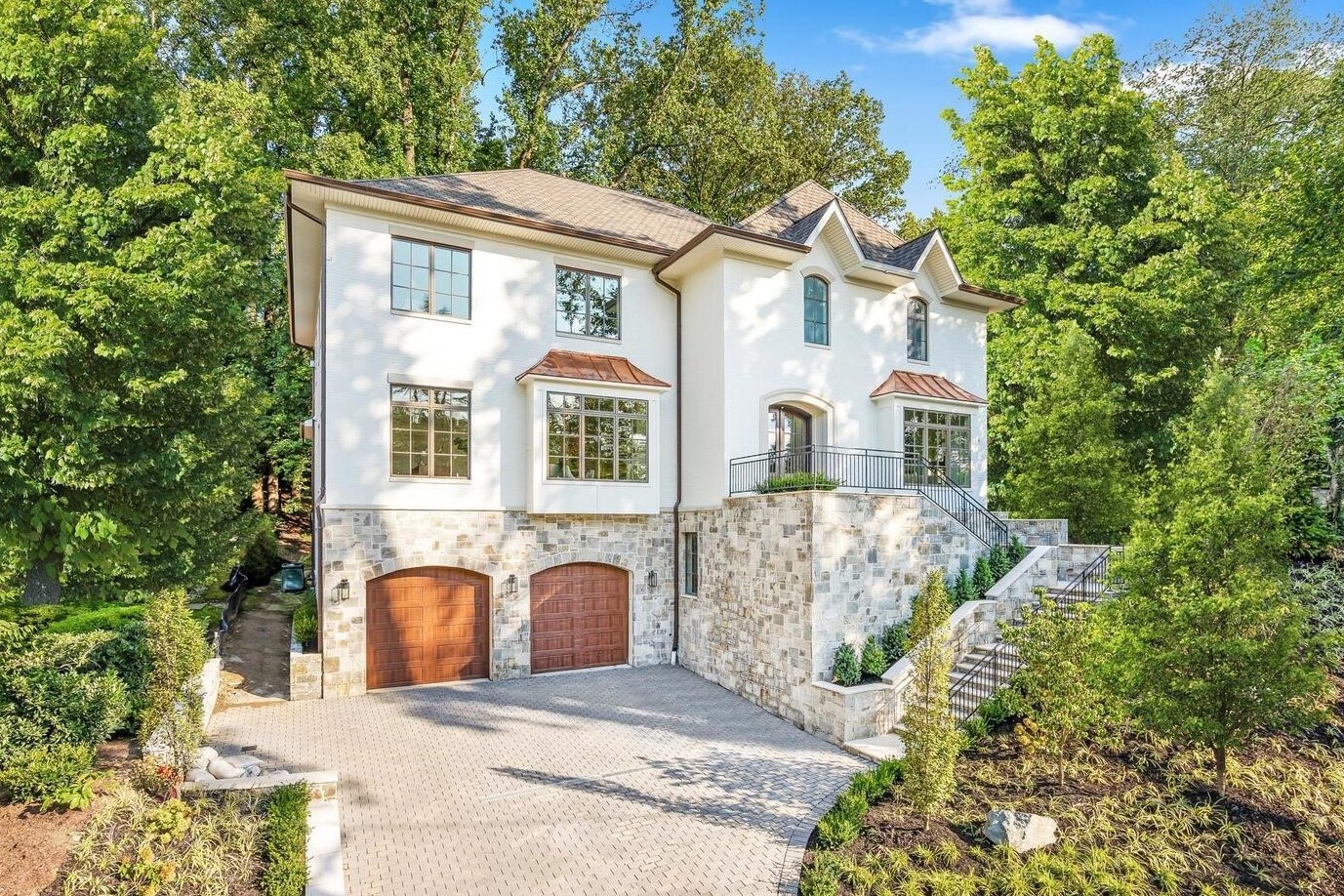
This new construction project started as an empty lot covered in trees that was easy to pass right by without noticing, however it was located in the highly sought-after Palisades neighborhood of DC that brings high sales prices — almost always in the $2 Million+ range. The difficulty with new construction projects isn’t in the construction process itself but in the research, planning, and strategic pricing.
Our borrower had plenty of high-end comparables to use when developing a pricing and construction plan, and they wisely chose to fill the middle segment of the market — lower than the closest $4 Million+ comps and higher than the closest $3 Million comps. With their pricing strategy in place, they only needed to design and execute the construction portion at a high-end level without over-building.Inside this luxury home, our borrower chose to incorporate high-end features such as custom trim work, built-in storage, and oversized, custom windows strategically placed to let in natural light without decreasing the feeling of privacy from neighbors. The styling maintains a high-end feel while keeping traditional architecture and design, meeting the “middle section” of the luxury DC marketplace and casting a relatively wide net of buyers at the price point.Some of the most notable features of this home are the 10-foot ceilings, custom walnut shelving and storage, owner’s suite fireplace and lounging area, smart home features throughout and SONOS surround sound system, and Thermador appliance suite. All these strategic features and materials came together to produce a gorgeous $3.7 Million home that went under contract in just one month at full price.Need funding for your next new construction project?
Need funding for your next new construction project?

Capital gains taxes – three words that can make or break an investor. These after-the-sale taxes on the profits from selling investment properties can be as high as 30% when you add up both state and federal taxes. Ouch, there go your profit margins. So how can an investor avoid them? One strategy is to utilize the 1031 Exchange to defer those taxes while keeping your money invested in real estate.
The 1031 Exchange is a powerful tool for investors, making it a favorite among many savvy and successful real estate pros. Here are the basics of the 1031 Exchange:

The first half of the exchange is the property you currently hold. In order to qualify, this property must be held for business or investment use – meaning no personal residences. What about fix and flips? The answer is typically “no” because the intent of most flips is to acquire, rehab, and sell within a short period of time. In the eyes of the IRS, this does not fit their criteria for eligible properties. But fear not rehabbers! You can still utilize a 1031 Exchange if you rehab a property and rent it out before selling. The IRS sees this as a long-term investment property, and therefore eligible for capital gains tax deferment.
At WCP, we have solutions for investors looking to acquire, rehab, and rent out an investment property so that it can qualify for a 1031 exchange. To secure and rehab the property, you can utilize a Fix and Flip Loan, and when the construction is complete you can refinance it into a Rental Loan with a 30-year term. This allow you to flip a house using hard money, and qualify the property for a 1031 Exchange by holding it as a cash-flowing property, all with one lender, minimal documents, and minimal effort. Boom.
The second half of the exchange is the property that you intend to acquire. This property must be of “like-kind” to your current property, meaning the property must also be an investment, not a personal residence. Qualified property types include, but are not limited to, office buildings, shopping centers, mixed-use properties, multifamily properties, single family homes, and even undeveloped land. Another option that you can utilize would be a “Tenants in Common” property. So if you currently hold a multifamily rental building, you can potentially use the 1031 Exchange to sell that property without paying capital gains taxes, and reinvest in undeveloped land (since it is still considered “like-kind” property).
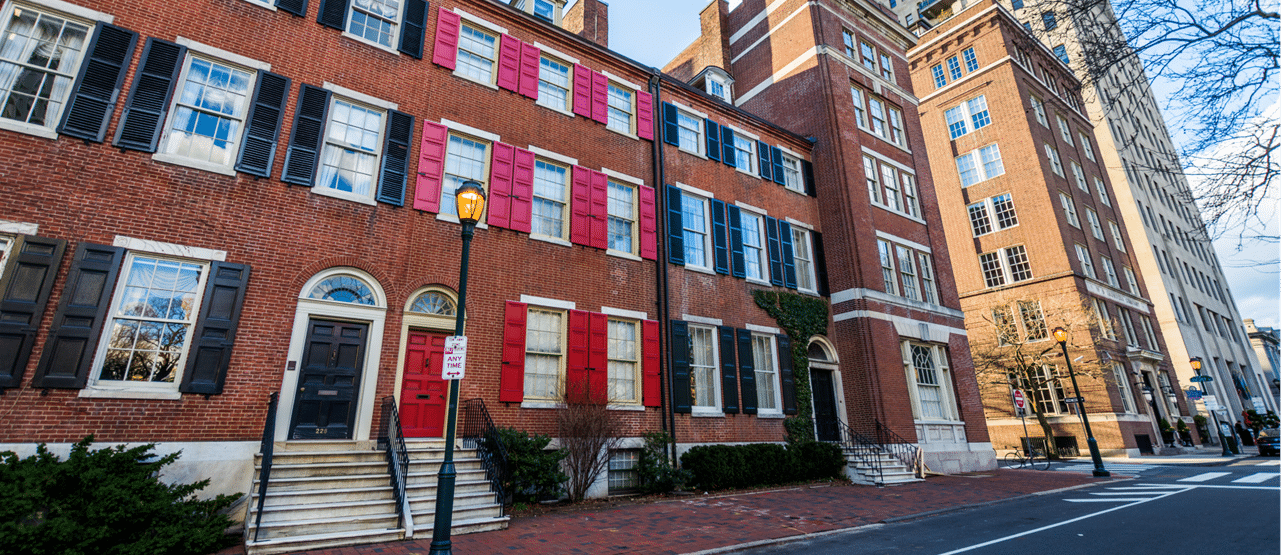
According to 1031 Exchange guidelines, you will likely need a Qualified Intermediary (01) to serve as a third-party to accommodate the sale, and hold subsequent payout from your currently held property. The 01 also purchases the replacement property on your behalf before deeding it over to you. The entire exchange is facilitated by the 01, and they are the ones hanging on to your money before the replacement property is purchased, so be sure to choose a reputable 01. The demand for legitimate Ql’s has led to the creation of businesses, usually tied to title companies, that provide 01 services. This is a great place to start, but always ask for references and do your due diligence before picking one for your exchange. While it may not be a flat-out requirement, we highly recommend that you utilize a 01 to ensure that your transaction is done correctly and your exchange doesn’t fall through because of title or escrow issues that can be avoided.
To properly execute a 1031 Exchange, you need to plan ahead. Once the sale of your currently held property takes place, the clock starts ticking on your first time restriction. At that point, you have 45 calendar days to identify your replacement property. The rules allow you to identify 3 (there are some exceptions to that limit) potential replacement properties within the 45-day window, but here’s the catch – one of those identified properties must be the one that you close on. In the world of real estate investing, 45 days feels like the blink of an eye for vetting and selecting properties, so how are you supposed to ensure that you meet this restriction? The answer is to plan ahead. Before that 45-day window even starts, you should be doing all of the necessary legwork to line up your replacement property. The goal here is to set up your timing so that you have your desired replacement property under contract the minute your currently held property closes, and that 45-day window begins. That way, even if the first contract falls through, you’re giving yourself the maximum amount of time to fall back on your next identified property.
Now if a buyer stepped forward for your currently held property as a surprise, planning ahead isn’t going to be very easy. In that scenario, you will probably have to be quick on your feet and highly organized if you want to identify your replacement property just 45 days after your currently held property closes. This isn’t impossible, but it can be hectic.
Your second time restriction also starts ticking as soon as you close on the sale of your currently held property. From that time, you have 180 days to close on the selected replacement property. That’s right, both time limits are activated on the same day, so be mindful that your 180-day limit is not influenced by your 45-day Identification Period. Also, know that no extensions or exceptions will be granted – you have 180 days and not a minute longer. The only event that can change this time limit would be the due date of your tax return. If your return is due before the end of your 180-day window, then that date becomes your new time limit. This is why we can’t stress enough how important planning out your 1031 Exchange is!

Yes. Deferring your capital gains taxes is absolutely worth the work. If you intend to keep your money invested in like-kind real estate, you should never have to pay capital gains taxes. With the right planning and guidance from expert counsel, you can defer these taxes indefinitely while holding positive cash-flowing properties throughout your investing career. In theory, you can keep deferring capital gains taxes through 1031 Exchanges until the day that you die. This means that you escape paying the taxes, and your heir receives the property free from the taxes that you owed. This makes a 1031 Exchange a powerful tool for building a cash-flow portfolio using pre-tax dollars and protecting your estate from the IRS. Now that’s a win-win scenario.

The term “off-market property” refers to any piece of real estate that is not currently listed on a Multiple Listing Service (MLS). This includes properties that are not currently for sale, as well as properties that are for sale but are not listed with a real estate agent, like a “for sale by owner” scenario. It is common practice for a real estate agent who has been hired by the property owner to “list” the property, meaning they are creating a “for sale” listing in their local MLS. By listing the property, the seller’s realtor is hoping that a buyer’s realtor will see the listing, inform their client, and the client will want to buy the property.
Another type of off-market property is the scenario known as a “pocket listing,” “quiet listing,” or “hush listing.” This refers to when a realtor contracted to sell a property by the owner, but they never list it on the MLS. This may occur if the owner wishes to keep the property sale quiet (i.e. real estate being sold due to a divorce, death in the family, or other private affair), or if the realtor expects the property to take a long time to sell. As soon as the property is listed on the MLS, it’s number of Days On Market begin to accumulate, often negatively impacting the sale price of the property. To avoid the pressure to lower a sales price, a realtor may keep a property off-market and use their own network to sell the property before it ever becomes officially on-market.
Now that you know what an off-market property is, it’s time to dive into why investors actively seek out these properties.
The first reason is competition. The minute a property hits the MLS, every local realtor has access to it, opening the floodgates of potential buyers. When a property is kept off-market, only those within the seller’s network or investors actively seeking out properties like it will have a shot at purchasing it. If a property with high potential as an investment is listed on-market, it is common that it will sell almost immediately due to
realtors who have investor clients or are investors themselves. This is bad news for investors who aren’t able to monitor the MLS at all times.
The second reason is price. A major reason behind listing a property on the MLS is for a seller to get the most buyers, and more buyers means a higher sales price. Well the basic principle behind any investment is to buy low and sell high, right? For an investor, competition is the enemy since it drives up the sales price and eats away at their profit margin. It’s fairly common that the winning offer is from an investor offering higher than the asking price. Off-market properties tend to have little competition by comparison, making them a favorite for savvy investors.
The third reason is condition. It’s a common misconception among homeowners that if their property is in poor condition or is significantly outdated, that it simply won’t sell. This means that many properties that owners are interested in selling have not yet been listed on the MLS due to their less-than-impressive condition. This scenario provides the perfect opportunity for an investor to find one of these owners and offer to purchase the property as-is (and at a lower price) so that they can take care of the renovations.
So far we’ve covered the what and the why behind off-market properties, now it’s time to learn how to find these hidden gems.
There are a wide variety of ways to locate off-market properties that range from very low-effort to fairly involved, and choosing the best options for you really depends on the amount of time and effort that you are willing to put in. Here’s a list of our top 4 picks for finding off-market investment properties ranging from easiest to hardest:
The absolute easiest way to find off-market deals that are for sale, as-is, and ready to be rehabbed is to use an online wholesale deals platform like Off-Market Deals HQ. The sole purpose of this service is to provide investors with properties that are for off-market, for sale, and vetted by a team of experts to ensure that every property is actually worth investing in. It doesn’t get any easier than that.
Another easy way to find off-market deals is to network. If you are actively presenting yourself as a cash buyer of investment properties, you can utilize meetups and social media to connect with realtors and wholesaler that can help you find the perfect off-market property to invest in. It’s true what they say – your network is your net worth.
“For sale by owner” lists can be a great way to find an off-market deal. While you may end up spending a fair amount of time scrolling past properties that are in decent condition, it’s not uncommon to find a handful that are pretty distressed. The idea is that some of these properties may be inherited or fell into the owners lap without the current owner wanting to spend time, effort, or money to offload the property. A simple for sale by owner listing can be an easy way for owners to liquidate an unwanted property, which means it can be an excellent resource for investors.
Another tried and true method is direct marketing. This can be in the form of cold calling or mailers, but either way, the idea is to build a large list of owners of potential investment properties and reach out to let them know you are interested in buying their property as-is. This strategy truly is a numbers game, so don’t get discouraged if you don’t get many leads at first. The more you reach out, the closer you’ll be to finding your next deal.
Still looking for additional ways to find the perfect off-market property? Here’s a comprehensive list of resources and ways to market for deals off the MLS:
We’ve covered what an off-market property is, why investors actively seek out these deals, and how to find these investment opportunities. The final part is simply doing it. It sounds easy enough, but it truly takes commitment to keep trying new strategies until you find one that works. The key is to see it as a numbers game – the more channels you have set up to find your next off-market property, the more deals you will see. When you have a high number of deals coming across your lap, you can afford to be picky and only choose the right projects for you. Finding off-market properties is not rocket science, it simply takes knowledge and effort. We hope we’ve provided you with enough knowledge to get started, now its up to you. So get out there, find a deal that works for you, commit to it, and start earning some money!
Once you’ve found the perfect off-market property, you may need capital to purchase the opportunity before another investor can jump on it. Finding the right financing is key to your success as an investor, so be sure to only work with a lender that can close fast, offers low rates, and provides excellent service throughout the full term of your loan. Washington Capital Partners has an outstanding track record for saving borrowers money while bringing clients to closing quickly and efficiently. If you need funding for your next project, be sure to contact our hard money lending team about what we can offer you.

This featured ground-up construction project is located in Bethesda, MD, just minutes from the ever-popular Bethesda Row. Bethesda remains an attractive choice for buyers looking to retreat from the hustle and bustle of DC, and this contemporary luxury property does not disappoint.
The median home price for the neighborhood is $610,000, however, within 1 mile of this property, several other multi-million dollar new builds have been completed, giving our borrower the comps they needed. Our borrower was able to reimagine the spacious lot and opted to construct a modern, luxurious single-family home, featuring modern Scandinavian-inspired finishes throughout. This home features 6 bedrooms, 5 full and 2 half baths, totaling approximately 7,000 square feet of living area.
This project started with an older single-family home located on a large, prime corner lot. Our borrower knew the maximum potential for resale value was based on starting from scratch versus renovating the existing property.
The final lot features an abundance of outdoor space, including a spacious backyard, two balconies located in the main and guest bedrooms, as well as a massive rooftop terrace. The focus on outdoor space paired with the contemporary styling makes this home attractive to both home-bodies and those who love being outdoors.
Inside this state-of-the-art luxury home, our borrower chose high-end features and materials inspired by Scandinavian designers that buyers in the Bethesda area expect for the price point.
The final product features an oversized 2-car garage, sleek, gourmet kitchen, custom bar with a glass-enclosed wine display, dining room, family room, plenty of bedrooms and bathrooms, as well as a designer laundry room.
Some of the most notable features of this home are the beautiful European oak wood floors throughout, custom mahogany pivot door, two-story foyer featuring one of the designer custom hand-blown glass chandeliers, Pella wood clad windows, custom cabinetry in the kitchen, smart Thermador appliances, and floating stairs with glass railing. The after repair value for this property is an impressive $3.05 million.
Washington Capital Partners was proud to finance this project and see this incredible new construction home come to life. It’s our mission to help our clients succeed in real estate investing with solid, profitable projects like this one. So if you are interested in acquiring your first or next fix and flip or new construction project, we’re happy to provide you with a free loan underwriting so you can see all of the costs and profits associated with financing your deal.
Looking to Buy Your Next Project?


 We’re still not sure what the overall impacts of COVID-19 on the real estate investing market are yet, but there are some more immediate shifts and changes that investors are seeing midways through 2020. In particular, the best methods for finding off-market properties seem to be shifting as a response to COVID-19. We’re seeing older methods that many investors have moved away from in recent years resurge as primary strategies and some new emerging ways that just might surprise you. Here are our top 5 ways to find off-market deals due to COVID-19: