This month, we step back to review what the DMV investment community navigated through in 2025, and look ahead at what will shape investor strategy in 2026.
The past year forced investors to adapt quickly. The year ahead will require discipline, clarity, strong relationships, and strategic execution.
2025 was a year that pushed DMV investors to sharpen their systems and upgrade their approach. Below is a concise recap of the major shocks and market shifts that defined the year.
A major DSCR-backed fraud ring unraveled, sending hundreds of Baltimore homes into foreclosure and shaking investor confidence. Due diligence tightened immediately:
Every deal, operator, and renovation faced more questions than in prior years.
New tariffs increased the cost of lumber, steel, appliances, and other key materials. Margins compressed, affordability worsened, and several development projects paused as budgets no longer made financial sense.
1. Inventory Finally Returned
After years of scarcity, supply increased, days on market rose, and buyers regained negotiating power. Patient and selective investors found better entry points.
2. The Two-Speed Market Emerged
Luxury surged while the mid-market cooled. Operators who understood the split identified pricing inefficiencies and new value opportunities.
3. The Gray Wave Arrived
Retiree-driven listings released long-held, aging homes into the market, many for the first time in decades. This created fresh value-add inventory across the region.
4. High, Volatile Rates Became the Norm
Consumer borrowing remained expensive, appraisals tightened, and buyer hesitation grew. However, well-priced and well-executed deals continued to move.
5. A Rational Market Returned
No more automatic ARV jumps. No more two-day DOM. Fundamentals mattered again, and professional operators gained the advantage the way the market is designed to function.
If 2025 was the year of recalibration, 2026 may be the year of answers. The macro environment is uncertain and the market is shifting.
These are the questions that will shape investor strategy heading into the new year:
Yes, but in a healthy way. Expect a market defined by:
A reset is not a threat for us. It is a return to fundamentals, which favors disciplined investors.
If recession hits:
If stagflation lingers:
Both paths reward conservative underwriting and strong execution.
Lower rates will help, but slowly. Affordability remains strained, savings continue to decline, and household debt is rising. Buyer sentiment requires time to recover.
Expect modest increase in demand, not a return to the frenzy of 2021.
Model slow exits and modest ARVs. Build in an ARV haircut. Precision matters more than ever.
Buyers are selective. Details matter again with more options to choose from. High-quality projects move. Mediocre ones sit.
Flip, rent, BRRRR — optionality reduces risk and increases flexibility.
Cash and strong reserves create leverage in negotiations and allow investors to act decisively.
Costs remain elevated and timelines remain unpredictable. Build contingencies into every plan.
Federal employment, technology sector growth, and retiree turnover have far more influence on housing demand than weekly rate headlines.
Both.
Be cautious in acquisition, bold in execution, and disciplined in underwriting.
That is how investors will win the year.
Let’s Talk About Your Next Funding →

If you want to sell a fix and flip property fast in Washington DC, you need a plan that matches the pace of the local real estate market. Buyers move quickly in this area, and they look closely at renovation quality, purchase price, and long term value.
To stand out, you must control rehab costs, manage your holding costs, and price the home based on real market conditions, not guesswork.
This guide shows you how to attract serious buyers, pass the home inspection process smoothly, and close with stronger profit potential.
Before going step by step, here are the core ideas real estate investors should remember when flipping homes in this market.
Selling a flip quickly in this region starts long before you list the property. Real estate investors who plan early, study comparable sales, and follow the house flipping process closely usually achieve better results.
The District of Columbia market changes from block to block. Median sale price, buyer activity, and the number of days on market shift often. A fixer-upper in Brookland may attract different potential properties and buyers than a similar renovation in Georgetown. Study:
Good due diligence helps you price accurately, avoid unnecessary improvement costs, and prevent extra holding costs such as loan interest, utilities, and taxes.
Your exit plan guides everything, from financing options to layout changes. Many investors wait until the renovation is complete, which leads to delays and rushed decisions. Think about:
When your exit strategy is clear, the renovation and listing flow together smoothly.
A quality home renovation is the foundation of any successful flip. Buyers in this area pay close attention to the details and compare your finishes with every other investment property on the market. If the renovation feels unfinished or inconsistent, potential buyers will negotiate hard or leave for a cleaner option.
Make sure the electrical, HVAC, and plumbing systems are updated and safe. Follow all building codes, improve natural light where possible, and create modern kitchens and bathrooms that support strong resale value.
High renovation standards reduce repair requests during home inspection, keep closing costs predictable, and help you flip a house faster with fewer issues.
First impressions matter when flipping houses, and staging gives buyers a clear idea of how daily life could feel inside the home. Even simple staging can raise profit potential, increase engagement at open houses, and make your investment strategy more effective.
Fresh paint, clean landscaping, bright lighting, and a sharp entryway help potential buyers connect with the space as soon as they arrive.
Staged homes almost always sell faster and often attract buyers with stronger financing strength because the property feels move in ready and well cared for.
Overpricing slows everything down. DC buyers track the market and know the difference between realistic and inflated pricing. Use renovated comps, not distressed properties. Compare:
It’s often a better idea to set a purchase price that attracts multiple buyers instead of chasing one long shot. Accurate ARV pricing protects your net proceeds and keeps the project moving.
Good photos increase online visibility and generate more showings. Weak images reduce traffic and slow down the sale. Include:
Marketing plays a major role in how fast you sell.
DC real estate area has strict permitting rules. Missing paperwork slows down the sale. Stay ahead by:
A smooth compliance record helps buyers feel confident and keeps the home-buying and closing process on track.
A skilled team helps you price correctly and negotiate with confidence. You may work with:
A strong team keeps your sale moving, catches issues early, and makes sure financing stays on track so you can close without unnecessary setbacks.
Holding costs add up quickly and can shrink your profit margins before you realize it. Monthly taxes, utilities, insurance, and interest continue whether you are ready to list or are still finishing the last renovation cost items.
Plan your listing date early, keep the rehab schedule tight, and respond to potential buyers as soon as inquiries come in.
Avoid downtime between phases because every extra week reduces the return you expect when you flip houses. In many cases, a faster sale increases your net return more than holding out for a slightly higher purchase price.
Speed matters in the DC market, and the faster you can identify a strong buyer, the sooner your flip can move toward closing. Review each offer promptly and look for buyers who communicate clearly, respond quickly, and show they’re ready to move forward without hesitation.
Pay attention to how soon the buyer wants to complete their inspections and how their preferred settlement date aligns with your goals. A buyer who stays organized and keeps the process moving is often just as valuable as a higher purchase price because they help you avoid additional holding time.
Smart negotiation helps you protect your profit and keep the entire transaction on track so you can shift your focus to your next project with confidence.
Small mistakes can slow your sale or cut into your profit. Stay ahead by avoiding these common issues.
Avoid these pitfalls and your flip will attract stronger offers and sell faster.
Related: Top Mistakes to Avoid When Flipping Houses in Washington DC
Selling a fix and flip property quickly in Washington DC comes down to smart planning, accurate pricing, strong marketing, and a smooth compliance process. When you understand buyer expectations and stay disciplined with your renovation and exit strategy, you create more predictable results and protect your profit.
If you want to move faster and secure more successful flips, having the right financing partner makes a real difference. WCP provides fast closings, reliable funding, and clear communication for Washington DC investors. Our Washington DC fix & flip loans help you buy, renovate, and sell with confidence.
Talk to a loan officer today and see how WCP fix and flip loans can support your next DC flip.
If you are flipping houses in Washington DC, you already understand how competitive real estate investing can be. Buyer preferences change fast, the renovation process can reveal hidden repair costs, and shifting property values can impact your final profit margins.
Many real estate investors enter the world of house flipping with excitement but underestimate the careful planning needed to avoid costly mistakes.
The best way to protect your return on investment is simple. Learn the most common mistakes that slow projects down, inflate budgets, or shrink your potential profit.
This guide breaks down each one, using real examples from DC’s historic homes, distressed properties, and fast-moving neighborhoods. Whether you’re about to start flipping houses or already have experience, this guide will help you avoid the mistakes that cut into profit. Use it as your personal roadmap to flipping success.
Underestimating renovation costs is one of the most common mistakes new investors make in the Washington DC house flipping business. A rowhome may look like a good deal from the outside, but once you open the walls, you may discover outdated wiring, old plumbing, code violations, or structural surprises that raise your purchase price and your repair costs.
These hidden issues increase carrying costs and lengthen timelines. Many historic homes also require necessary permits for even simple updates, which can add delays if you are not prepared. Market knowledge is critical here. Renovations in DC often cost more due to labor, materials, and strict compliance with local building codes.
A simple rule protects your bottom line. Add a 10 to 20 percent contingency fund to your budget. It gives you room for unexpected expenses, keeps your project on track, and protects your potential profit when you reach the selling process.
Choosing the right property starts with choosing the right neighborhood. Washington DC is a hyper-local real estate market where home values and listing price expectations change from block to block. Two flipped homes only a few streets apart can attract completely different types of prospective buyers and homebuyers. Smart real estate investors look at:
Neighborhoods like Petworth, Shaw, Brookland, and Capitol Hill often deliver strong return on investment, but only when your renovation matches the expectations of the buyer pool. Choosing the right location helps protects your final sale price, keeps your listing competitive, and reduces the risk of sitting on the market.
Ignoring DC permit rules is one of the fastest ways to derail your flip. Many house flipping mistakes start when investors try to begin work quickly without the necessary permits for plumbing, electrical, framing, or structural changes. Permits matter because:
DC is known for strict oversight, especially in older or historic home areas. Doing your due diligence before closing helps you estimate timelines, carrying costs, and exit strategy more accurately.
Hiring the wrong contractor can destroy your flip. Older DC properties often need advanced repair work, and inexperienced contractors may misjudge timelines, costs, or the condition of historic features. Before hiring anyone, verify:
Good contractors improve your potential profit. They keep your project on schedule, avoid rework, and help you pass inspections smoothly.
Over-renovating is one of the top mistakes real estate investors make when flipping houses in Washington DC. Many people upgrade a property far beyond what the neighborhood’s listing price ceiling will support.
The best investors follow one rule. Renovate for the comps, not for your personal taste.
Some areas support high-end finishes with strong curb appeal and luxury details. Others sell faster with clean, modern, rental-grade upgrades. Understanding buyer preferences and the local price point helps you protect your profit margins.
Holding costs add up quickly in any investment property, especially in Washington DC where taxes, utilities, insurance, staging, and interest accumulate month after month. Many first-time flippers forget to include:
These expenses eat into your potential profit if your renovation falls behind schedule. Smart investors use a simple mortgage calculator to estimate carrying costs before making an offer.
DC homebuyers want move in ready homes, modern layouts, and energy efficient systems. If your renovation does not match buyer expectations for that neighborhood, your flipped home may sit on the market. Focus on:
The right upgrade choices attract prospective buyers, improve home sales results, and support a strong listing price.
Some investors skip inspections to make a faster offer, but this creates one of the biggest risks in DC. Older homes often have hidden electrical issues, water damage, outdated plumbing, or foundation settlement that can cost tens of thousands of dollars.
A quick pre-inspection or contractor walk-through protects you. It helps you identify structural issues, estimate renovation costs accurately, and negotiate with confidence.
Skipping inspections may save a few hours, but it can cost months of lost profit later.
Your financing options affect your speed, cost, and ability to secure the right property. Many real estate investors lose deals because lenders move slowly or add red tape at the last minute. The right financing partner should offer:
A reliable lender like WCP supports your investment strategy and increases your flipping success in competitive DC neighborhoods.
Many failed flips happen because investors assume the property will sell at the top of the market. DC comps can fluctuate based on interest rates, inventory levels, and seasonal demand. Before you buy, look at the most realistic numbers:
When you base your exit strategy on solid comps rather than optimistic projections, you protect your profit and reduce risk.
Related: How to Sell Your Fix and Flip Property Fast in Washington DC
Flipping houses in Washington DC can be a profitable path to building wealth, but only when you avoid the mistakes that slow projects down or eat into your margins.
The most successful investors buy with accurate numbers, plan every phase of the renovation, stay compliant with permits, work with reliable contractors, and understand exactly what DC buyers want.
When you manage the budget, timeline, and exit strategy with discipline, each flip becomes easier, more predictable, and more profitable.
If you want reliable funding for your next flip, WCP makes the process simple. Our Washington DC Fix and Flip Loans offer fast closings, up to 92.5% LTC, and clear communication from start to finish.
Talk to a loan officer today and see how WCP can help you secure the capital you need to buy, renovate, and sell with confidence.

If you’ve been to Home Depot lately and felt like you’re paying Tiffany prices for plywood — you’re not imagining things.
Across the DMV real estate market, fix and flip investors are feeling the effects of global trade shifts and rising costs. Tariffs on key building materials are reshaping renovation budgets and forcing investors to rethink project strategy.
Tariffs on lumber, steel, and appliances are pushing renovation budgets higher. That $50K reno? Now it’s closer to $60K just to keep the same scope.
Permits are slow, materials have longer lead times, and contractors are booked out. A four-month flip can easily stretch into six — meaning higher carrying costs and less room for error.
Reno costs are rising, but buyer expectations (quartz counters, big ranges, turnkey finishes) haven’t changed. Some investors are cutting scope, fixing instead of replacing, or walking away from deals that no longer pencil.
1. Lighten Up Your Renos
Stick to cosmetic flips with clean finishes and strong staging to keep costs down and margins up.
2. Bulk Buy Materials
Stock up when you find deals to beat future tariff markups and avoid delays.
3. Keep Your Crew Close
Loyal GCs and crews are key as labor rates climb and availability shrinks.
4. Partner Up
Split costs and share risk to tackle bigger projects that still make sense in tighter market conditions.
Real Talk: It’s not a game-over moment — it’s a play-smarter moment.
In today’s DMV real estate investing market, efficiency, strong supplier relationships, and tight deal analysis are your edge.
Even a great deal on paper can go sideways. Here are four common pitfalls — and how to keep your investment on track.
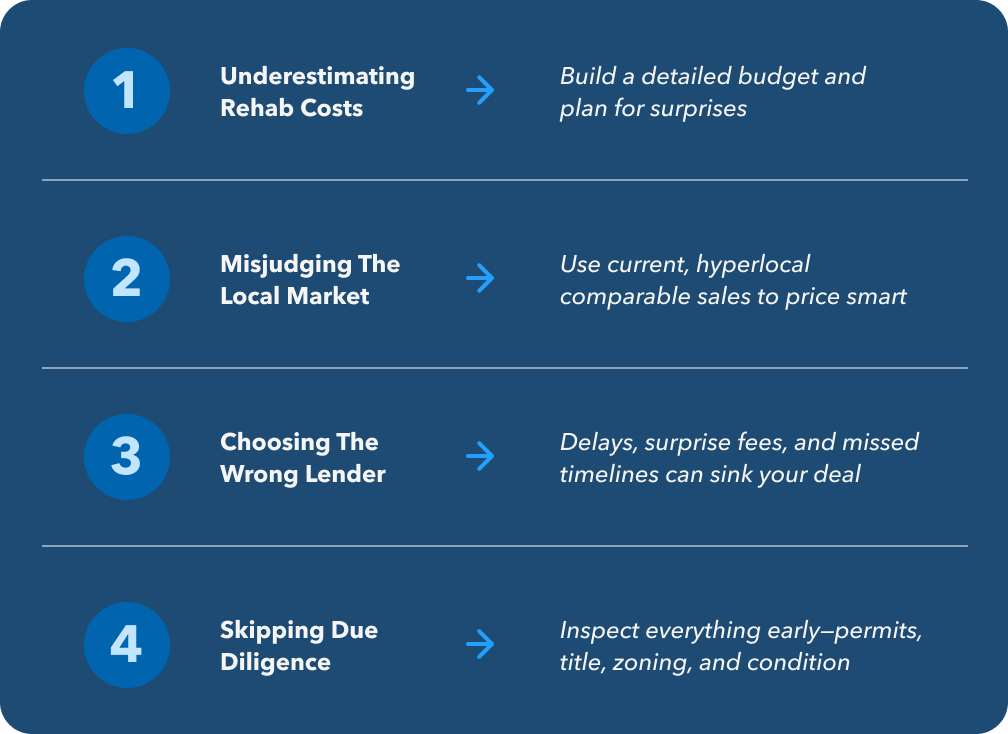
Pro Tip: Smart investors don’t just chase good deals — they plan ahead to avoid the risks that can derail them.
Want more investing insights? Click below to learn 3 mistakes that can sink a deal.