How to Spot Trim Worth Salvaging in Your DC Row House Flip

Whether you’re doing a rehab or restoration, preserving the period charm of a DC row house should be a top priority because it can save you money in material expenses and increase your property’s ARV. Antique millwork is usually made of hardwoods like heart of pine or maple, giving you an instant upgrade over box-store stock trim.
A thorough inspection of your property is very important in detecting damage from infestations. Antique millwork can be extremely valuable, however, DC’s humid climate can expose your property’s trim to termites and carpenter ants, jeopardizing any reuse. What’s the best way to identify damage and how do you know if the trim is original and adds enough value to warrant the salvaging/restoration costs?
That’s where this guide comes in. Read below to learn everything from damage detection to how to evaluate if it’s worth restoring, replacing select areas, or starting from scratch with all new trim.
How to Research Historic Trim and Molding Styles in Washington D.C.
By knowing the difference between modern trim and historic molding before visiting touring an investment property, you’ll be able to better identify these historic elements and how they can impact your renovation budget and resale value. Here are a few ways you can research what historic woodwork looks like in Washington, D.C. to help you identify historic trim.
- Visit open houses in historic neighborhoods near your investment property. If you can’t go in person, look at the listing photos and pay close attention to crown molding, baseboards, and decorative trim in areas like staircases and fireplaces. Look for listings built in the same decade as your flip house and those that use the term “original moldings” and “period charm” in the description.
- Browse catalogs from suppliers of architectural salvage or reproduction moldings. See what details are typical for the time period when your investment property was built. Kuiken Brothers have an excellent illustrated Molding & Millwork Design Catalog with sections devoted to historically accurate moldings vetted by experts.
- Check with your local historic organization, which in DC is the Historic Preservation Office. You can also check if your property or other houses on your street have been in the National Register of Historic Places.
Ways to Identify Common Historic Moldings by Type and Era
Once you’ve learned how to recognize historical millwork, you’ll be able to use your trained eye to quickly evaluate a property’s woodwork. As you walk through, gauge the potential savings by salvaging it before you make an offer. This will help you figure out roughly how much you can expect to pay to incorporate high-end trim work in the property, giving you an edge in a hot seller’s market.
The first step to identifying original period molding is knowing what era and style it belongs to. You’ll want to look for molding that was made around the same time as the home was built. You can’t always rely on a real estate listing to identify your home’s building style because MLS listings aren’t reviewed for accuracy by any sort of architectural editor, so you’ll have to figure out the molding style by looking at the profile and details of the woodwork. Here’s a handy guide to styles common in Washington, DC and northern Virginia area homes built between 1795-1945.
table, th, td {
border: 1px solid black;
}
Trim and Molding Style Guide for Historic Properties in the DMV
| Architectural Type and Era |
Distinguishing Trim Features |
| Federal/Classic Revival (1795-1835) |
Flat baseboards and tall crown molding with simple, plain lines |
Dentil horizontal moldings |
| Victorian (1835-1900) |
Tall baseboards with lips |
Highly detailed and ornate details |
| Colonial Revival (1880-1945) |
Bullnose baseboards and casings that are more ornate than the Federal style |
Double hung windows with multiple panes with reeded casings |
| Craftsman (1905-1930) |
Simple lines that are squared off and geometric without rounded edges |
Showcases natural wood features, stained or varnished rather than painted |
Check the Trim for Infestations Before Calculating Salvage Savings
Old wood often harbors insects and other pests. Humid cities like Washington, DC are prone to termites, and carpenter ants that plague the majority of the east coast. Look for signs of carpenter ants along the quarter molding attached to the floor and around window casings. If you see sawdust, tiny holes bored through the wood, or hear rustling sounds in the walls, these are warning signs that you need an exterminator and that your trim might have insect damage where you can’t see it. Termites are more difficult to diagnose, but a qualified home inspector or pest control expert should be able to tell you if there’s an insect problem you’ll need to fix.
Carpenter ants and termites don’t have to be deal breakers, but they will significantly affect your renovation budget because not only will you have to repair or replace the damaged wood, you’ll also have to pay for an exterminator. If you’re doing a
fix-and-flip to sell in DC, Virginia, or Maryland, you’ll have to disclose that you treated for termites which can make buyers skittish and could even translate into more days on the market. Salvaging original woodwork to reduce expenses is one way to offset these extra costs.
Check for Molding Authenticity
Authentic historic molding is usually made of quarter sawn hardwood which creates a smooth, straight grain with parallel lines. Stained or varnished molding that showcases the natural beauty of the grain will always be made of wood.
Trim is often painted, however, and that’s where the clever imposter comes in. MDF, or medium density fiberboard, can look just like wood when it’s painted but it’s actually made of wood fibers held together with resin that has been compressed. It’s denser than plywood, but it’s also not as durable as real wood. MDF tends to tear and shred when removing, making it impossible to save and reuse.
The easiest way to tell if the molding in your rehab is real wood or unsalvageable fiberboard is to look for the grain. If it’s painted and you can’t see it, try looking inside a closet for unfinished pieces inside, or you can remove the paint with sandpaper in an inconspicuous spot to check if there’s raw wood underneath or something else.
If you don’t have real wood moldings, don’t despair. Run your numbers again with the additional outlay for new moldings and you might find that your profit margin is still big enough to justify the expense. If the trim is in good condition and you don’t plan extensive renovations requiring its removal, you might be able to refinish the existing moldings with a shiny new coat of paint and have it look just fine without costing anything at all.
Look for Missing and Broken Pieces
Cracked or damaged molding doesn’t have to be a deal breaker. One of the great things about wooden trim is that it can be repaired easily. Small repairs can be sanded out, and pieces that have been glued back together will look great once they’re disguised with a good coat of paint and put back in the room.
Beware if large areas of molding are missing, as you might not be able to repurpose it in your flip. Matching up moldings from a bygone era can be difficult and costly, requiring a special order or the commissioning of custom millwork, which can blow your budget and affect your overall margin. If you have to wait for your custom reproduction trim, it can increase your carrying costs as you wait weeks for delivery. You might be better off ordering reproduction moldings from a catalog that carries ready to go inventory or matching the style of the period with modern stock.
Shiny New Hardware Usually Means New Trim
If you see shiny nickel hardware on the windows or brushed stainless steel locks on the door, it’s possible the trim has been replaced and you should inspect it carefully to see if it’s high-quality hardwood that could be salvaged for savings, or if it’s lower quality trim to be replaced, meaning another line item in your budget.
Older houses usually have vintage hardware, including pieces like sash pulls and stays not found in newer homes. They are made of metal and are often adorned with beautiful floral designs and motifs from nature. Metal develops a beautiful aged patina over time, and older pieces are solid cast, which makes vintage brass or bronze is easy to spot.
Areas that can benefit from the grandeur of historic moldings are usually spaces people use to relax, like the master bedroom or around a fireplace. Luckily, these are areas that are the least likely to have moldings damaged by wear and tear and usually haven’t been renovated as often as kitchens and bathrooms meaning the original woodwork might still be intact. Spending your time restoring a gorgeous Colonial Revival mantle with reeded millwork as the focal point for the living room will help you create stunning listing photos to get your house sold or leased faster.
How to Find Out When Fire-Damaged Properties Hit the Market
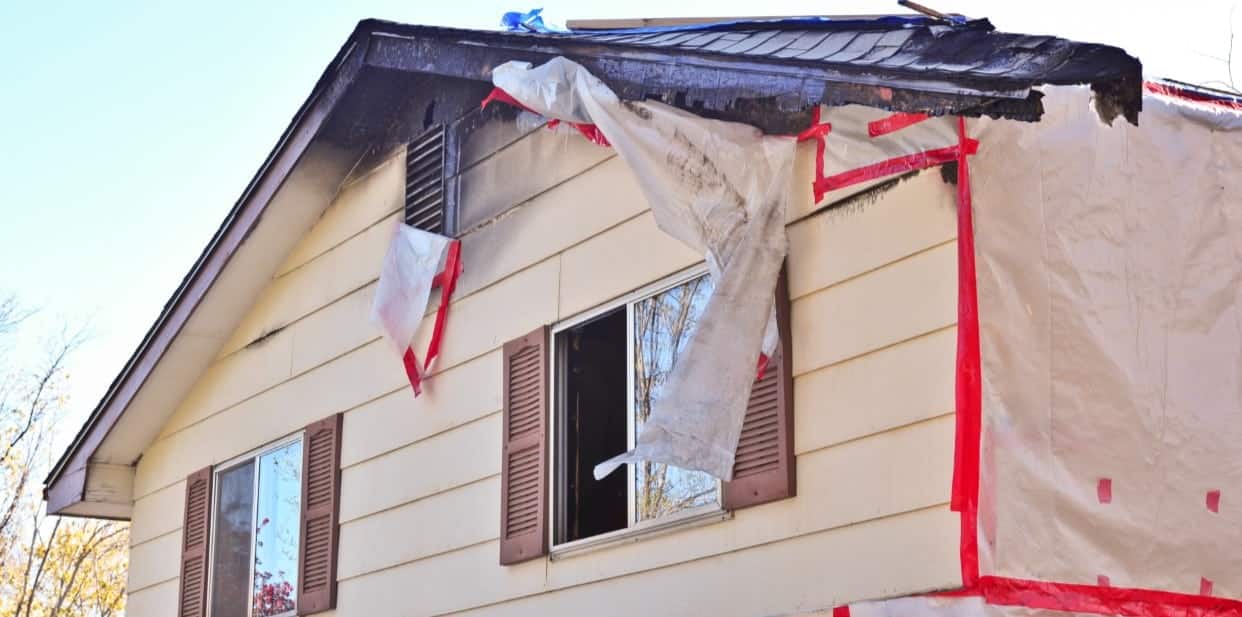
Finding a property flip can be hard enough, hence seeking out one specific type of property like a fire-damaged house can turn into a never-ending pursuit. Although they are rare, you can find fire-damaged properties on wholesale website such as GreatDCDeals. But there are other things you can do to amp up your search. Consider using the strategies below to get notified when fire-damaged properties become available.
Networking with People That Come in Contact with Them
When a house fire occurs there are a lot of people involved. Meaning, there are a lot of people you can find and build relationships with. Everyone involved from putting out the flames and dealing with the aftermath are all people that could be the source for your next “smokin” deal.
Here a few people to network with:
- Insurance agents
- Insurance adjusters
- Firefighters and their fundraisers
- Contractors and home repair companies
- First responders
Next, it’s time to create a plan for how and where you’re going to meet these people, establish a rapport, and bond with them. To stary, you can tap into your own circle of friends and family that have personal relationships with these people.
If you don’t know anyone who can help connect you with the aforementioned individuals, try looking up local events. Charity events, fundraisers, conferences, and even volunteering opportunities are all situations where you can meet with them face-to-face. For example, fire stations are always having events that range anywhere from cook-outs to bingo nights, are always looking for volunteers. By putting yourself in a situation where you’re helping or supporting them, they’ll be more likely to give you leads on burned-out properties.
Using the Internet to Set Up Alerts
An easy, free way to get real-time information on fires is setting up an alert system on Google Alerts. Use any email account to set up an alert system
here. As a result, you can easily keep tabs on the areas you’re interested in buying a burned house in. For example, if you want information on fires in PG county you can set your alert system to email you anytime something is published online with the words “fire PG County.”
Notifications from news articles and tweets will hit your inbox allowing you to capture information on the fire and even the address. By having the address you can then visit the property in-person or submit a
FOIA request for the full report.
Using Social Media to Find Fire Damaged Properties
You probably check your social media accounts a few times a day, right? Why not follow or like your local fire department’s social media account to see information on fires in the area.
The DC Fire and EMS twitter account does a great job at posting the address of a fire they’re responding to and updates regarding injuries and resolutions. They also share information on upcoming events where you can plan to meet them face-to-face and start building relationships.
The Differences Between Bridge & New Construction Loans

Bridge vs. New Construction is a comparison of two types of hard money loans that both serve real estate investors and developers. Both loan programs function as financing tools to acquire a piece of land or structure for investment purposes. Determining which is more advantageous to you depends on your investment strategy and the length of your project.
Bridge loans are a financing option for investors looking to quickly purchase a property or piece of land for investment purposes. In DC’s highly competitive market, it can be challenging to juggle finding the perfect property, qualifying for long-term financing, and purchasing it before the competition. To secure the property they want, investors will use a bridge loan as a short-term financing solution and then refinance into long-term, permanent financing later.
New construction loans provide funding for developers looking to purchase shovel-ready land or land with a property on it that they intend to tear down. Funding for this type of project covers the cost to purchase “shovel-ready” land as well as construction costs involved in building a new structure. “Shovel-ready” land means land that has plans, zoning and
issued permits in place. Having these ready allows for construction to begin immediately after closing.
Bridge Loans vs. New Construction Loans
A major difference between these two is that new construction loans fund the construction of a new structure, whereas bridge loans allow investors to purchase a land or property, but typically do not fund any construction costs. Investors who obtain a bridge loan will usually begin construction after they have refinanced out into their long-term loan. Use the chart below to explore some of the other differences between a bridge and new construction.
| Bridge Loans |
New Construction Loans |
| Funds to purchase “shovel-ready” land or land with an existing structure to flip |
Funds to purchase “shovel-ready” land or land with an existing structure to teardown and rebuild |
| Developer will typically pay off the existing loan by refinancing into another loan |
Developer will pay off the loan upon selling the property |
| Rarely includes funds for construction |
Almost always includes funds for construction |
When is a Bridge Loan Better
Bridge financing would be a better choice for an investor in the situations below.
Need a Short-Term Loan now but will Refinance Later
Investors that need financing for a short period of time before refinancing into a long-term loan should use bridge financing. It will enable them to acquire their property quickly, sometimes within a few days. Because bridge loans are so flexible, investors can refinance into a long-term loan whenever they are ready and have all of the required permits and documentation.
Doing a Construction-Heavy or Development Project
Developers doing construction-heavy, commercial or mixed-use projects in hot spots like Washington DC typically plan for well over 12 months of work. Since most hard money loans have a 12-month loan term, developers will acquire the property through a bridge loan and get the required zoning and permit approvals in place. With these in place, they will then refinance out with another lender for a lower, long-term interest rate.
When is a New Construction Loan Better
New construction is a better option for investors and developers if they are dealing with any of the situations listed below.
Buying a Plot of Land to Build a New Structure(s)
If you’re looking to purchase a plot of “shovel-ready” land you would use a new construction loan. With this funding, you’ll be able to acquire the desired land and finance the new development on the property.
Buying a Distressed Property to Tear Down and Build a New One
If you’re planning to tear down and rebuild a structure on a piece of land, new construction is your best financing option. Investors that see value in land that houses a severely burned or mold-infested property will use this loan to tear down the structure and build a new one.
Need Financing to Buy Land and Begin Construction Immediately
Developers who have the required documentation to begin construction on a piece of land are often able to close on a new construction loan quickly and efficiently. The hardest part of new construction is getting the needed permits, so if you already have them, this loan will give you the funds released in “construction draws” to start building.
Bridge vs. Acquisition – Which Loan Should You Use?

Deciding between a bridge and acquisition loan depends on the scope of your project and how long you would need financing for. Read below to find out how these loans are different, similar, and when one would benefit you over the other.
What are the differences between bridge and acquisition loans?
One major difference between the two is that investors will use a bridge loan as a short-term solution to fund the purchase of a property while waiting to qualify for long-term financing, whereas investors who use an acquisition loan will keep the loan throughout the entire duration of the project.
Bridge loans are mostly used to fund larger, construction-intensive projects that typically extend past the 12-month loan term of a hard money loan. With projects like these, it can take a lot of time to collect the necessary permits and paperwork needed to begin repairs which is why investors will use hard money to purchase the property on the front-end. After the documents are in place, they will refinance into a long-term loan with their desired lender.
Acquisition-only loans are typically 12-month loans that allow investors to get funds they need to purchase an investment property. With this loan an investor will purchase a property, make repairs, and pay back the lender once the property is sold all in 12 months or less. This type of loan is very similar to the commonly known, “fix and flip loan” the only difference being an acquisition loan does not include funds for construction, investors pay for any repairs with their own money.
Use the chart below to explore the key differences between bridge and acquisition loans.
| Bridge |
Acquisition |
| Frequently used by experienced developers |
Frequently used for small to mid-scale projects by rehabbers |
| Commonly used to finance long-term projects (minimum 12 months) |
Commonly used to finance short-term projects (maximum 12 months) |
| Used as short-term financing, until permanent financing with another lender is secured |
Typically, the only financing for the project |
| Investors typically hold off on repairs until permanent financing is secured |
Investors immediately start making repairs upon closing the loan |
How are they alike?
Real estate investors are drawn to both loans for one main reason: the ability to purchase a property fast. However, not all
hard money lenders that offer bridge and acquisition financing have the efficiency and bandwidth to fund your deal quickly. Investors should always vet potential lenders to make sure they have the financial know-how necessary to get you to the closing table as quick as possible.
Things both bridge and acquisition loans have in common:
- Both are used by real estate investors
- Can be used to buy land
- Can be used to buy an investment property in any condition
- Can be used for acquiring a fix and flip project
- Both loans require a credit score of at least 600
- Both require a down payment from the borrower
- Both loan terms are typically 12 months or less
When would you use a bridge vs. acquisition loan?
If you’re looking to purchase a property to flip and have your own cash reserves for renovation costs, you should use an acquisition loan. This loan is specifically for investors doing traditional rehab projects that will be complete in 12 months or less.
If you’re planning on doing a construction-intensive project like a commercial project, multi-family rehab, or mixed-use development you can qualify for both a bridge and acquisition loan. The deciding factor between the two is whether your project will be completed before or after the 12-month loan term. If your project is going to extend past the 12-month loan term, a bridge loan will enable you to purchase your property before you secure final funding. If your project will be less than 12-months you should consider an acquisition loan.
Hard Money vs. Soft Money – Which is Right for You?

Choosing whether a hard money or soft money loan is better for you depends on your specific situation and investment strategy. Look below and discover the similarities, differences, and a few examples of when and where you may want to choose one over the other.
What are the differences between hard money and soft money?
One major difference between these two loans is that soft money is better suited for long-term investments whereas hard money typically fund short-term investments. But to truly understand the differences we need to start by defining each individually.
Hard money loans are commercial loans issued by lending institutions called
hard money lenders. These lenders structure loans based on the ARV (after repair value) of a subject property and less on the credit score or financial strength of the borrower.
Soft money loans are issued by commercial banks and structured on 2 main things: a borrower’s credit score and their ability to make monthly payments based on income.
Use this chart to understand the key differences between hard and soft money, so you can choose the right loan for your needs.
| Hard Money |
Soft Money |
| Funding for short-term investments |
Funding for long-term investments |
| Funding for properties in poor condition |
Funding for properties in good condition |
| Closings as quick as 2 business days |
Closings as quick as 30 business days |
| Higher interest rates |
Lower interest rates |
| Non-owner occupied properties |
Can be owner-occupied |
| More flexibility in structuring loans |
Strict standardized loan structures |
| Less government regulation |
More government regulation |
| Less paperwork required for closing |
More paperwork and procedures prior to closing |
How are they similar?
Hard and soft money loans are both issued by certified lending institutions and can be used by investors to purchase and renovate properties. There’s an abundance of both hard and soft money lenders in the U.S. making it easy for investors to find a lender that fits their needs.
Here are 5 things both hard money and soft money have in common:
- Both are used to purchase real estate
- Both can be used to purchase an investment property
- Hard money and soft money lenders both consider borrower history
- Likely require a down payment or collateral
- Both have monthly interest payments throughout the loan term
When would you use hard vs. soft money?
If you’re planning on purchasing a distressed property to renovate and sell for a profit you should use hard money. These types of projects called “fix and flips” are the most common type of investment project funded by hard money lenders. Investors are usually in and out of a fix and flip project in 12 months or less, which fits the short-term nature of hard money loans.
If you’re looking to purchase a long-term investment like a buy and hold, you should consider a soft money loan. In a buy and hold scenario, an investor will purchase a property, make minimal or cosmetic repairs, and rent it out for a long time regardless of any fluctuations in the market. Because soft money lenders can issue lower interest rates, you’ll be paying less over a long period of time.
Investors looking to acquire a new property, but do not need funding for any renovations or repairs could seek funding through both hard or soft money. The decision on which to choose is based on the condition of the property. If the property needs a lot of work you’re more likely to be approved for a hard money loan. If the property is in good condition or meets the desired quality conditions of a soft money lender, you can also use a soft money loan to fund the acquisition.
Why Hard Money Lenders Work with Investors with Bad Credit

In our Youtube video above, Senior Sales Associate, Gunnar Sevart shares his thoughts on working with investors with bad credit.
The term “hard money” means a loan based heavily on the hard asset (i.e. physical real estate and its accompanying value), and less on the individual. Traditional banks, on the other hand, rely heavily on investor’s scores to determine if they will lend money to an individual. Hard money loans came about because banks often can’t or won’t lend on highly profitable deals because the borrower has a less than stellar credit history.
Hard money lenders wanted to be able to fund these deals and be accessible to borrowers who are capable of completing their project successfully regardless of their credit score. This fills the niche and makes it easier for a wide variety of real estate investors to acquire and flip properties versus only the high-end developers that banks may choose to work with.
Most hard money lenders will still check a borrower’s credit score in order to have an understanding of their full financial picture, but items like cash available for a down payment and the property deal itself carry far more weight. When a borrower has a bad credit score, but a good deal, many hard money lenders will still work with them after collecting more info on any past foreclosures, bankruptcies, or other items that negatively impact a credit score.
At Washington Capital Partners we never want to turn someone away for their credit score. If you have a deal, but you’re worried about your credit be prepared to explain your financial situation including any past foreclosures or bankruptcies during the loan approval process. A low credit score isn’t always a deal-breaker.
Do you have a question? Would you like a free underwriting for your next deal? Contact us today by clicking the button below.
Top Reasons Why Investors Refinance with Hard Money

When you start a new project it can feel like your to-do list is a million items long. Adding a bad lender to that list is the last thing you want to deal with. When you’re unhappy with your lender it might feel like your options are limited and the easiest thing to do is to tough it out until you pay the loan off.
Things can get even worse when your lender refuses to grant you additional funds necessary to complete the project or an extension when the property is on market for longer than expected. If your current lender isn’t willing to work with you, the best way to save your project might be to refinance into a new loan with another lender.
Here are the top 4 reasons why you might need to
refinance:
Reason 1: Wanting a better rate than what you currently have
In a highly competitive market, investors must act quickly to secure the property they want. It’s not uncommon for investors focus on securing the property first, only to continue shopping for lower rates with other lenders when they begin the rehab process. Once they find a lender with a lower rate, they can simply refinance out of their current loan.
Reason 2: Not receiving construction draws on time
A lender that delays construction draw disbursements inevitably slows down your project’s timeline. It’s typical for a lender to hire a third-party inspector that can’t keep up with the number of draw requests or takes too long turning in their report. Other times lenders don’t have the funds on hand to wire money to you.
The industry norm is receiving your construction funds 4-5 days of receiving the initial request. This gives the inspector enough time to visit the property and your loan officer enough time to review the request. Refinancing with a lender that is faster and more efficient in handling their construction draws means less waiting time and more time spent bringing your project toward completion.
Reason 3: Needing a loan extension
If you’re approaching your loan maturity date and you’re behind on your project timeline the best thing you can do is request a loan extension. Unfortunately, not all lenders are understanding when investors run into roadblocks like unforeseen slowdowns in construction or spending more time on the market than expected. These lenders will call their loan regardless of the circumstance and leave investors in a tough spot. In this situation, investors have 2 options: sell the project either partially complete or for a low-ball offer and hope to break even or they can refinance with another lender.
Reason 4: Needing additional funds
There are plenty of reasons why you might need more money to complete your project, but not all lenders are willing to increase funding mid-rehab. Unexpected issues like flooding, mold, or theft of materials are all roadblocks that would require you to need additional construction funds. If you don’t have cash reserves and your lender is refusing to give you more funds, a refinance might be your next best option. A refinance can rescue you from your current lender and bring your project to successful completion for maximum profits.
In Conclusion
In a picture-perfect world, you would want your lender to support you throughout your entire project. The unfortunate truth is there are plenty of reasons a lender can push you towards refinancing mid-rehab. Refinancing can sound confusing and even risky, but it’s more common than you may think. It has the potential to dramatically improve your situation and give you the tools you need to keep your project going.
As the DMV’s largest hard money lender, we’ve helped investors like you get the funding or time they need to complete their projects. The refinancing process is straight-forward and can typically happen as quick as 2 business days. Click the button below to see the most asked questions about our refinancing loan program or to talk to a dedicated loan specialist today!
Why Trinidad is a House Flipping Hot Spot in Washington DC

For a long time DC neighborhoods like Petworth and Deanwood have been the front-runners for hot flipping locations. But with inventory levels decreasing and property values going up, investors are constantly searching for the next up-and-coming neighborhood to tap into.
If you’re an investor looking for an emerging neighborhood with plenty of inventory, look no further than Trinidad. This Northeast neighborhood is situated north of the bustling H-Street corridor encompassed by West Virginia Ave NW to the west, Mt. Olivet Road to the north, Bladensburg Road NE to the east and Florida Avenue NE to the south.
As Washington DC’s largest
hard money lender, we’re seeing more and more investors come to us Trinidad deals. It’s no secret that this Northeast neighborhood is becoming one of the most profitable markets for residential real estate flipping in the area. Here’s some info on why Trinidad is dominating the DC real estate investing conversation:
Property Values and Expansion
“Trinidad’s seen the largest increase in ARVs, making it a promising location for high returns,” says Senior Sales Executive, Kevin McGaughey. “With plenty of Victorian and Craftsman-style rowhouses, real estate investors have ample opportunity for single-family fix and flips and condo conversions.”
What does the future for the neighborhood look like? “Property values in Trinidad are highest along the H-Street corridor, but as you move toward Mt. Olivet Cemetery, prices are beginning to catch up,” says McGaughey.
Neighborhood Attributes
While Trinidad is predominantly residential – lacking retail and entertainment within the neighborhood – almost everything residents would need is a walk or metro stop away. Trinidad neighbors H-Street, a busy neighborhood known for its unique restaurants and entertainment.
Washington.org describes H-Street as, “A playground for foodies, performing-arts fans, and music lovers.” Being close to a bustling scene, but far enough to provide a quiet community is drawing more young people and families to Trinidad.
Featured Deal
To demonstrate the success investors are seeing in Trinidad, let’s look at a deal that one of our borrowers just completed. In the heart of Trinidad, our borrower purchased this rowhome in November 2017 for a little over $400,000 and after 9 months of renovations, the property has an ARV of a whopping $900,000.
So how did he do it? He did his research and saw the potential for properties in Trinidad as
fix-and-flip investments. Not only did he find this property, but he has another Trinidad flip he’s currently rehabbing. In the pictures you’ll see how he successfully brought this property back to life, giving every inch of the home the utmost attention to detail.
As a savvy real estate investor, you’re undoubtedly looking for that profitable “steal of a deal,” right? You want a property with large margins, meaning a big payday for you when it sells. As a hard money lender, real estate investors are bringing us DC deals every day and the amount of Trinidad deals is not a coincidence. Trinidad is proving to be an investor’s dream with plenty of distressed inventory, high resale prices, and plenty of qualified buyers.
How to Find Investment Properties Using Print Marketing

There are numerous ways to bring off-market properties to you, but print marketing is one of the easiest and most affordable strategies. Below you’ll learn what materials to consider, what information to include, and how to target the right audiences to begin building your funnel.
What to Include on Your Marketing Materials
Print marketing is only effective when done correctly. That’s why it is important to have a checklist of relevant information that you can double-check before you go to print. This includes how to contact you or find out more information.
We recommend you include your:
- Name
- Company name
- Phone number
- Email address
- Company Website URL
- Interest in purchasing their property
Next, you’ll need to know how to build distribution list of where to send your marketing materials to. Fortunately for you, all of this is available and for free! The Census Bureau is a great place to start – they publish multiple lists of demographic statistics including median household income, unemployment rates and other factors that could help you create a list of owners who may want to sell their house(s). You can also compare lists to previous years to see if houses are going up in value in certain neighborhoods. People are typically more willing to sell their properties in a booming market meaning you can use this data to get the jump on a hot neighborhood.
Now that you know what to include and how to find distribution lists, let’s go over some of the types of print materials that you can utilize.
Direct Mailers
Sending direct mail is a great way to generate leads and new investment deals. The mailers can be standardized postcards or personalized letters, as long as it has a clear message about your interest in that property. After you’ve designed your mailers, create a list of prospective properties or areas that would be good for rehabbing and send them out! Sure, mailers sound outdated in a primarily digital age, but often times it is the only way to reach property owners.
Door Hangers
Distributing door hangers about your interest in purchasing off-market properties is an easy way to get your name out there. Create a simple and easy to read template with your basic contact information (using the list above). Even if the owner isn’t considering selling at that time, they may keep your contact info just in case they decide to sell at a later date.
Bandit Signs
You know those bright signs you see at an intersection saying, “WE BUY HOMES” with an 800-number underneath that? These are “bandit signs.”
They get their name because they are illegal in some cities and if caught posting them, you could be fined. These signs can give you a lot of bang for your buck – they are relatively cheap and once you place them in a busy intersection or other high-traffic areas, you can kick back and wait for the calls to roll in.
If you decide to post bandit signs, here are 3 tips:
- Make sure they meet your county’s regulations on size and location
- Put them out on Friday nights and take them down on Sunday nights
- If placed on a post, secure the sign higher up so it is harder to take down
Want the exposure without the risk? Try to post the signs on your property, a friend’s property, or a property you’re currently working on – these signs are much less likely to be taken down.
Flyers
Using flyers is a simple way to bring deals to you without a lot of effort. They are relatively inexpensive (often cheaper in bulk) and can be kept straight-forward in their design.
Ideally, you don’t want to overwhelm your reader with too much information on a single handout but they need to grab the attention and convey a very simple message of your interest in purchasing their property. Flyers are customizable and easy to create, but always make sure to put all your contact info in an aesthetically pleasing way that is concise and easily understood.
After creating your flyers, deciding where you are going to post them is key. Make sure your flyer is placed somewhere it will get a good exposure, like on bulletin boards at grocery stores, local office buildings, title company offices, and small business that could benefit from that network, like landscaping companies.
If you are still having trouble finding your investment project, stay positive and try new designs for your material or switch up the type of print marketing material you are using. It can sometimes be a lengthy process but the return will be worth it in the end.
How Hard Money Loans Work

Looking for more information on how hard money loans work? The infographic below walks you through the process in a quick and easy-to-understand format. It skips all of the confusing jargon and helps you to understand the process in plain English while helping you prepare for a fast and easy closing, meaning you can focus on your project.The Process of Getting a Hard Money Loan
The Process of Getting a Hard Money Loan
Bank loans can take forever and you’re lucky if you ever get a real person on the phone. Relying on a private investor can lead to headaches and prevent you from reaching your goals the way you feel they should happen. That’s why using a hard money lender is so appealing. Your loan specialist is there as a partner to get you the money fast so you can do what you do best and then help fund your next project too. But hard money loans can seem confusing for a first-time user, so we’ve put together this quick and easy 9-step guide to walk you through the process.
Step 1 – Find Your Lender and Get Your Documents Together
The first thing you’ll want to do is to find a hard money lender that you can trust. It’s important that you feel confident as they are the ones who will be helping with and supporting your project. Once you have the right partner, you can help to speed up the loan process by making sure you have the following list of items ready to go:
- Address
- Purchase price
- Estimated construction costs
- After Repair Value (ARV)
- Scope of Work
- Exit Strategy
Step 2 – Evaluation and Underwriting
To help get the process moving, there are certain things that the lender will need in advance. Without these, you can slow down the process. Because it is not a bank, they need to mitigate risk by looking at your investment history & comparable properties.
That’s why you need to have the following ready before meeting with your specialist:
- Analysis of the property features
- Your estimated construction costs
- Addresses of comparables to confirm the ARV
- Potential profit margins of the deal
- Your experience level
- Access to your credit history
Step 3 – Approval!
If everything checks out above, then upon evaluation hard money loans can close in under 48 hours. If your loan is approved, you get a proof of funds and a lender letter and you’re one step closer to acquiring your new project.
Step 4 – Inspection
Before you can proceed, a lender-hired inspector needs to walk the property for extra assurance. The goal here is to make sure the lender feels confident in the property and the outline of the project. It is important for everything from new construction to flips.
Step 5 – Title Time
If the inspection checks out, you and a title company can close on the property. The title step is the trickiest part. If the title clears you can move on to step 6 which is your project. Sometimes the title gets caught up in a battle like someone else’s signoff being needed to sell. In this case, you and your team will work to get all needed clearances and then move to step 6.
Step 6 – Rehab
This is where the lender finances the construction via a “draw schedule” where money is released at milestones during the rehab process. The lender’s inspector monitors quality and progression and approves the draws as needed.
Step 7 – Interest Payments
Now that your project is underway and the loan has started, you’ll begin to make interest payments while construction is happening.
Step 8 – Flip It!
Once the project is complete, you can list it, sell it and move to your next project.
Step 9 – It’s Payback Time
Once sold, or upon project completion, it’s time to pay the remaining balance to the lender. You can also use this time to go over your next projects or see if the lender has any that you may find interesting. One of the big benefits of working with hard money lenders is that they get exclusive access to unique properties that are not normally listed on the MLS. Once you find one, then it’s back to step 1.