3 Steps to Analyzing Your Comps

Part of searching for the right rehab property involves analyzing options to determine which one possesses the best value. Consider these steps to help you make a wise decision!
Step 1: Determine Your Geographical Parameters
When a property is functionally obsolete it is important to figure out if it can be salvaged. Set a circumference for your search to focus in on logical comps. When comparing potential investments within your set domain, keep in mind the square footage because it is a key factor in determining the properties’ value. A large enough floor plan gives you the ability to incorporate an additional bed or bath, ultimately adding value to your investment. A property that is only equipped for 2 beds and 1.5 baths is not going to lead to a successful rehab when it is surrounded by 3 bed/2.5 bath homes. Your final rehab should at minimum be comparable to the other’s in the neighborhood, but ideally possess something unique to draw extra attention to your property.
Step 2: Establish the Neighborhood Factors
Identifying detractors and adders allows you to evaluate which property holds the better value. For example, if a neighborhood has double yellow lines on the main street; that is a good indicator that it is a busier road. Therefore, having a negative impact on the property location. No set dollar amount is assigned to each negative/positive because it differs between neighborhoods, but it is important to know what connotation they give a property when looking at comps.
Step 3: Select the Appropriate Comps
Make sure the comps that are being chosen are the same across the board for each property so you receive accurate results. Both parties involved should agree how far back in time you are going to review details of each potential rehab. Reviewing the resent selling period of each house will provide you with the most relevant information. Going over previous “under contract” or “active comps” do not provide as much value since they are subject to change.
When comparing properties, you want to make sure you are paralleling similar characteristics. In conjunction, you want to make sure you are receiving your information for each property from the same platform. Keeping as many variables consistent as possible allows you to see the comparisons in the best light.
Comparing investment properties can be a hefty process to take on alone. Contact us today to have our educated staff help secure the right property for you.
Real Estate as Your Core Investment Strategy

According to a survey conducted by BankRate Financial Security Index on July 19, 2016; consumers of all ages have chosen real estate as their preferred investment strategy for money they will not need for more than 10 years. Real estate is so appealing because it is a tangible investment that you can touch, see, and feel. Although, an investment done wrong could put you in the hole for a long time. Here are a couple steps to take to develop a risk minimization strategy and receive higher profits.
Make money the day you buy it. Buying a turnkey investment property at retail value enables you to generate a small return by just having the potential to rent it out. Instead, search for a real estate opportunity that needs work and has potential to build equity. A rehab or fixer-upper opportunity can range from work as simple as replacing countertops, carpet, and paint all the way to full gut renovation. You can start your investment with 10, 15, 20% equity day one giving you the ability to stomach market swings and cash in bigger profits the day you sell it. Not just that, the capital invested in this deal will also be less because you will not be paying retail for this type of property.
When and how to finance your deal. In metropolitan areas such as DC, the price of real estate is very steep. If your cash does not help cover your cost of acquisition and repair, don’t let that be the reason you delay what could be a great cash flow opportunity. Some banks can help you with renovation financing for a property that will become your primary residence; however, for an investment opportunity their guidelines will not work in your favor. That’s where we can step in and help.
When an opportunity is identified, we can help by financing your project, and in some cases help you pay for repairs. Once your project is completed, then you are ready to go to the bank to get the best rate you can in order to have the long term financing solution you need to help you reach your goals.
Real estate investing can be difficult, but when done right is very rewarding. Let us help you pursue the right project so you can enhance your investment portfolio. Here at Washington Capital Partners we are happy to help our customers succeed one deal at a time.
What to Keep in Mind When Partnering on an Investment

In order for a partnership to be profitable, each person involved should possess a similar vision for the project while bringing a unique expertise to the table. Learn what to consider when contemplating partnering on your next rehab before you dive in.
![]()
1. Assemble the Right Team
A successful partnership starts with the right people. If both parties have the same skillsets or personality a large target is created on the overall weaknesses. Before jumping in, reflect on what the other person brings to the table, and if it will help you cover more aspects of the project. When considering people to partner with, find those who compliment your strengths and enhance your weaknesses. If you are a passive person, look for someone who isn’t afraid to push the project along to keep everyone on schedule. This will allow you to leverage your partnership for a smooth deal.
2. Define Your Roles
There are several details to sort out among your business partner; paying bills, pulling permits, overseeing contractors, etc. Make sure to clearly define in writing everyone’s duties in attempt to avoid discrepancies midway through the project. If you are creating an LLC, you will want to have an Operating Agreement drafted up to lay out the lines of the partnership.
3. Accountability and Supporting Your Partner
Have a system in place to measure each partner’s responsibilities so that everyone can be held accountable. Having and tracking measurable goals will motivate people to act on their task at hand while documenting any areas that are not being completed. With that being said, even though each person’s role is clearly defined, you never know what is going to happen. You need to be prepared to step into any aspect of the project at any time if extra support is needed. It’s just as important to support each other as it is to hold each other accountable for their share.
4. Communication and Manage Expectations
It may sound like common sense, but make sure that everyone involved constantly knows the latest updates regarding the project. Even though you may be in charge of a certain aspect of it, keeping everyone involved builds strong comradery and unity within the partnership. Once people begin to turn on each other, it is difficult to stop the partnership from internally combusting and becoming unstable. Having excellent communication allows both partners to feel valued and invested in the rehab.
Partnering with individuals who bring a vast amount of intellectual assets to the team but not enough capital? Hard money lending is the perfect solution to fix this void in the partnership. It is more important to find people who have knowledge/skillsets to contribute to the project. If neither partner has the financial backing to support the funds for the rehab, Washington Capital Partners can make sure that is not the reason you back away from an investment opportunity. Contact us today to apply for a loan!
![]()
Turn Big Profits by Leaping from Basic Rehabs to Full Gut Projects
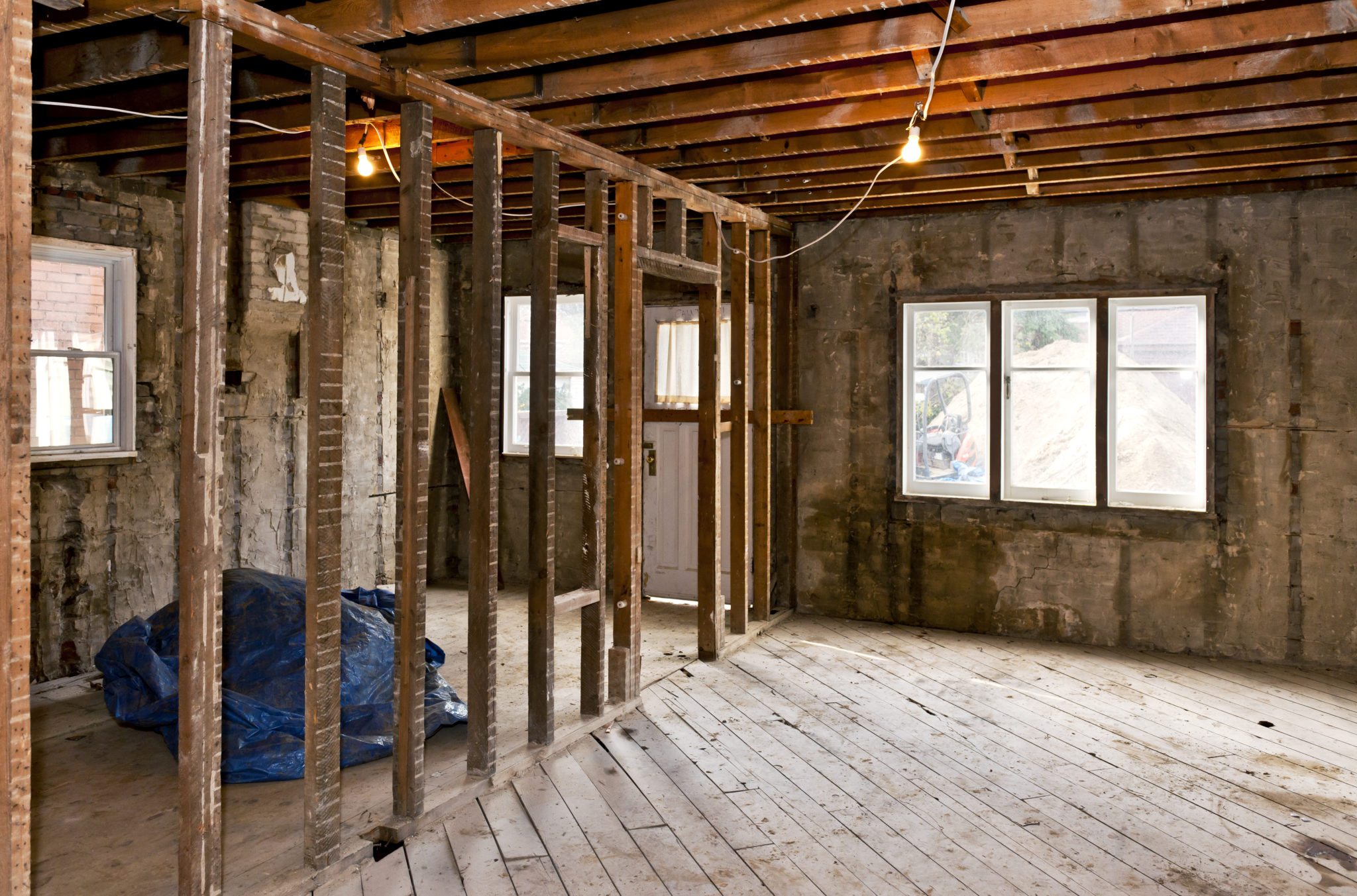
Rehabbing a basic paint and carpet project is a great starting place for new investors, but at some point branching out to larger projects is an attractive proposition. From experience, implementing the following steps can streamline your transition and not only help you avoid costly mistakes, but also come out profitable.
Don’t go undercapitalized
While we are available to give you the backing you need to make the jump to larger projects; a larger project has a higher degree of complexities and a longer timeline. If something unexpected happens or changes need to be made, you want to make sure you are covered with enough money to complete the project.
Do your due diligence
Understanding your market and the demands of the location is very important. Doing your due diligence means that you see what others are doing in the neighborhood. This enables you to validate the direction of your project, or go back to the drawing board. When walking these properties, you can see what makes sense and what could be improved so your property stands out. This should be done in the pre-construction stage because once you start building it is harder and costly to make adjustments.
Proper Network
Surround yourself with the proper network. While you can easily manage a paint and carpet project by working directly with your carpenter, painter, flooring contractor, etc.; we strongly encourage you work with a general contractor on larger projects. They can help you get the project completed correctly and on time. Having a general contractor that can quarterback the trades (architectural, engineering, mechanical, plumbing, etc.) on your team is crucial. When looking for a general contractor, make sure they are properly licensed and able to pull the correct permits. This is imperative to you being able to stay on track with your timeline. With a larger project comes a larger span of potential problems and people to deal with. Although, if you have the right network, you can benefit from their experience.
Realistic Time Frame
With an intensive rehab you will have a longer time frame. While most lenders offer 6 month long products, and optimism my drive you to work with them, realistically plan for a 12-month timeline. A full gut renovation project will need time for permits, the rehab itself, and potentially a longer selling timeline due to a higher price point. Make sure you have ample time to complete your project and avoid paying extension fees that will eat up profits.
We understand it can be intimidating to take on your first big project, but don’t let hesitations hold you back. There are doors of opportunity waiting for you. We are here to support you and help you succeed. Contact us today and let us know how we can help you!
![]()
My Hard Money Loan is Maturing, but my Project is not Complete!

There are several unpredictable factors that can delay the completion of your project. The worst thing you can do when you realize you are not going to meet this deadline is default your loan. Knowing how to act when these situations arise can save you money, avoid harsh penalties, and prevent you from potentially losing your investment via foreclosure.
Below are 3 steps to take if you find yourself in this situation:
1. Request an Extension from your Lender
As soon as you realize you are not going to meet your timeline notify your lender. The more advanced notice you can provide them, the more willing they are going to be to offer you an extension. Don’t hide, we repeat don’t hide! The key is to be very up front about the situation and realistic when letting them know how long you will need to complete the project. Typically, these extensions do come with a cost, but they will allow you to complete your project and hopefully sell for a profit.
2. Refinance your Project
In some cases, the lender will not be willing to extend the loan. Knowing this in advance, prior to extended maturity will enable you to find another lender and avoid the penalty fees that you will have on a defaulted loan. Penalty fees will end up costing you more money than refinancing.
3. Sell Your Project
Ideally you will be able to receive a loan extension or refinance your project. If the cards do not play out in your favor, your best option is to sell your project; hopefully recouping all of your money and luckily some profit. Although, when you are in these kind of situation breaking even is still a good proposition than losing money.
We at Washington Capital Partners understand that situations might arise. We have helped our clients with extensions and refinance new clients. Additionally, our network of investors enables us to step in and help you make the connection if you need to sell.
Ideally all projects will go as planned, but it is hard to plan for what the future will bring. If you find yourself in a sticky situation, give us a call!
![]()
5 Warning Signs You May Need a New Roof

Taking care of necessary roof repairs can help your investment property sell faster, but what are the signs to look for when assessing repairs? These 5 warning signs are a quick and easy check list to go over when assessing a property:
1. Roof Age
Listen to the numbers. If the roof is 20+ years old, experts are most likely going to tell you that it needs to be replaced. This is a great benchmark to be able to efficiently determine if the roof should be replaced or if it still has some life left in it.
2. Shingle Condition
Are the shingles curling, buckling, or completely missing? Make sure you scan the entire roof for these signs. Pay close attention to the spots that receive the most direct sunlight. The shingles that receive more sunlight are likely to show signs of curling before other areas of the roof do. Don’t be afraid to get a ladder for a better view.
3. Roof Valleys
Roof Valleys can show key signs of the condition the roof is in. Look for missing or broken shingles in the creases. These areas get the brunt by Mother Nature with precipitation running through these valleys to get to the gutters. A leaky roof is most likely to occur if the condition of the roof valleys is compromised.
4. Chimney Flashing
If the house has a chimney, inspect the area where it meets the roof. Ideally, it will be filled with a water-tight fitting. If you see that it is filled with cement or tar consider replacing it with a metal flashing system for the most efficient results.
5. Granules in Gutters
As the shingles are reaching the end of their life span granules will start building up in the water that runs through the gutters. The more granules that are falling through your gutters Another sign to pursue is to scan the roof for inconsistent coloring. As the shingles shed granules the color of it will begin to fade.
If the owner lists their property as-is, be mindful of what to look out for when evaluating the roof’s condition. If it does not pass some or all of these inspections above, there are a few things to consider when looking into replacements.
- Determine if you are going to use the same material or try something different. There are several different materials that can be used; asphalt, wood, clay, concrete, slate, and metal.
- If you are using a new material for the roof that is heavier than the original make sure you have the framing evaluated.
- Consider the climate when replacing, some materials are better suited for certain weather conditions.
Knowing what to look for when searching for an investment property can help you understand the level of work and time that is needed for the project. Before you have a professional physically go on the roof to evaluate its condition you can initially scan from the perimeter of the house and get a better understanding about your potential investment. If you are looking for real estate investment opportunities, or have a potential project in mind, contact us about your scenario! We would be happy to provide funding options and educational information to help you succeed.
Must Read Before Buying a Hoarder Home

Whether you are interested in investing in your first hoarder property, or have been down this road before, the tips below can help you tackle your next investment!
1. Understand the Work Load
Since the property is in a distressed condition it will require more attention than the typical investment property, but can be a very rewarding project for you and the neighborhood. With that said, don’t underestimate the extensiveness of this project. Underestimating the smell can be very expensive in the long run. Hoarders tend to hang onto animals and let them roam the house without cleaning up after them. When this occurs in a house for several years the floor boards and framing rot away. Should you choose to invest there are extreme cleaning professionals who can help gut the house for you.
2. Leave it to the Professionals
Before you put the property under contract, do your research so you know exactly what you are getting into and the expenses you will have. It is highly recommended to bring a team of professionals with you to survey the property.
- Start with a General Contractor to get advice and an overview of the property.
- Hire a Structural Engineer to evaluate the foundation, the condition, and the repairs that will need to be done.
- Plumbing is another common problem in hoarder homes. Hire a Professional Plumber to check all the pipes and systems so you can have an idea of what is in working condition.
- It is also a good idea to have an Electrical and Mechanical Engineer scan the property to check the electrical wiring and mechanical systems in the home.
- By hiring professionals in these key field they will be able to complete all the major check points and determine if you will need to do a teardown or renovations. When touring, keep in mind your safety. Be aware of any structural issues that could potentially cause you harm. Wear long pants, boots, gloves, and a mask when walking the property.
3. Making the Right Offer
Once you have acquired all of this information about the hoarder property it is time to evaluate the offer you want to make. Time is money and the more time you need to spend on an investment the more money it is going to cost you. With a hoarder property, you will likely be buying it as-is. There will be time added to empty the home that you would not have to account for in many other investment opportunities. Evaluating your timeline allows you to understand the offer you need to make in order to accommodate all the projected repairs and the market price for that neighborhood. Having a full understanding of the time and money you will need to complete the project is crucial to making the investment successful.
Hoarder properties are not uncommon in this business. It’s great to be educated on how to deal with them so you don’t pass up a great investment opportunity despite the instant shock of the property’s condition. We have worked with several people flipping hoarder houses and would love to help you through the process should you choose to pursue it. If you have any questions or want to find out more about investing contact us!
Are You Analyzing Your Deals Correctly?

You found the deal to move forward with, next step is to seek out a loan to help you finance your new project. The excitement of a new project sets in and you can’t wait to get to the final product, but how do you reassure yourself that you are receiving the appropriate funding to get there? A crucial part of being an investor is educating yourself on what to look out for and what to expect. This doesn’t mean you need to know everything there is to know about real estate investing. It simply means you should know the questions to ask your lender so they can help educate you on the proper loan you should seek to finance your investment. Ultimately, helping you, avoid any surprise fees that can easily get over looked.
Learn about the market and the area you are interested investing in. Pick up on what most homes have in the community, and what you can do to shine a spotlight on your property. If every house on the block has a deck, you will want to install a deck or refurbish an existing one to make your property competitive. Once you come up with the necessities to keep up with the neighborhood, brainstorm what could set you apart. A finished basement, an extra bedroom, or a fireplace can bring extra appeal to your property because it is not available in the majority of its surroundings. These are great topics to consult with your lender on. Odds are they have been through similar situations to be able to make suggestions while figure out what makes most sense for your budget.
Put yourself in the shoes of the buyer, what is in your line of sight from the house? Do you look out the windows and see a beautiful park or a major highway? What attractions are in close radius of the property? You have to mix the numbers with the art, meaning that your property value is greatly affected by the “appearance” of its surroundings. Take all of this into consideration when contemplating investing in a property. You don’t have to do it all alone, your lender can be a valuable resource to assist you in analyzing all of these details to find you a good deal to invest in.
The cheapest way is not always the best path to pursue. Get a quote from 2-3 different contractors to give you full understanding of what they are going to do for you. Don’t zone in on the numbers, they are important to consider, but not the only thing to consider. Take time to review what you are getting in that quote. Are they installing cheap and low quality equipment that the home buyer is going to have to replace within their first year, or is it going to be a property that you would want to purchase? For example, it is not uncommon for contractors to quote you out for hollow doors instead of full wooden doors. This may not seem like a big deal, but the difference can be incredible to the home buyer. Most hollow doors are light and flimsy, provide minimal protection from outside temperatures, and need replaced within a year or two. You do not need to feel the need to splurge on everything, but value the price differences and ask yourself if you were living in the home what would you hope was installed during the renovations.
When seeking funding for your investment pay attention to all of your soft cost, cost that are not considered direct construction cost, these can include legal fees, draw fees, inspection fees, commitment fees, etc. Washington Capital Partners does not charge commitment fees, draw fees, or wire fees. With that said, not every lending company has the same policy. Keep that in mind when talking to potential lenders, find out what your soft cost are going to be so you are not hit with any surprises throughout your investment. Your lender should be more than just a source of money; they should be your “business partner” to assist you throughout your investment which is why you should educate yourself about them before making any decisions.
There are several details that go into analyzing your deal, investing, and seeking financing from a lender. We mentioned a few in this blog, but if you are interested in learning more please contact us! Our passion is real estate investing, and our team wants to help you and your investment succeed.
Tips for Investing in the Summer

The end of the hot spring market is approaching. If you have not put your investment on the market yet don’t panic, here are some Summer investing tips to keep in mind that will give your property the value and appeal it needs to sell as the market slows down. Always keep in mind that first impressions speak volumes. This means that although you may have had to dig out the basement, or add on new electrical panels as necessities to keep up with the neighborhood, that is not what the buyer is going to notice first. Although these are great additions to tell the buyer about, the buyer will initially be captivated by your attention to detail throughout the property and its physical appearance.
Curbside appeal is crucial; it is the first image the buyer soaks up when touring the property. Since we are entering the beginning of Summer, buyers are going to be attracted to bright colors and a well-groomed yard. Plant flowers to add vibrant colors to the exterior. Side for grass instead of straw when revamping the front yard. A luscious, freshly cut, green yard looks much more appealing this time of year then some straw and grass seed. Power washing the exterior is a budget friendly way to freshen up the exterior appearance if you are not planning on replacing the siding or painting the brick. Go the extra mile to seal the drive way to give it a fresh, clean coat. These details can transform the appearance of your properties’ exterior and increase the amount of people that will pursue your property. Spending the extra money to give your investment the exterior make over it needs can help you get your property off the market faster thus cutting down the days of interest you are paying on your loan.
When sprucing up the interior focus on what will catch the buyers eye and welcome them into their potential new home. Put yourself into the mindset that you are selling a home and not just a house. You want people to be able to visualize themselves living here. This is where a stager can come in handy. We highly recommend having someone stage your house before you put in on the market. This can greatly decrease the amount of time the property spends on the market because it allows people to visualize themselves living in the property. Instead of leaving it to the buyer’s imagination to develop what the place could look like, provide them that image right off the bat to create an emotional connection to the house. As basic as it might sounds make sure nothing is broken, and that all the hardware matches. If a cabinet is not quite hinged on correctly and the buyer notices, this could put a negative image in their head of how you treated the property while it was in your possession. Always complete a final walk through with your contractor. Come prepared with a checklist of items to make sure are completed up to standard. Do not be afraid to point out imperfections you notice during the final walkthrough, if you noticed them odds are potential buyers will notice them as well.
Once construction and renovations conclude and you are ready to put the property on the market research, hire a professional photographer to take your listing pictures. There is a noticeable difference between photos taken from a smart phone and those from a professional camera. Invest in a quality professional photographer to capture the project you have put so much time and money. These pictures are what will represent your property online and be the initial impression potential buyers get of your property. These pictures need to intrigue people so they want to come tour the property. In addition to taking impressionable pictures you will want to price your property reasonably but competitively.
If you are looking to list your house in the upcoming Summer season, consider details you can embellish your property with. If you don’t know where to begin start on the outside, curbside appeal can make a world of difference in the total audience you attract. These extra cost might be worth investing in to result in a faster sell in the slower market time approaching. Most important of all, you save money because you will not be carrying the property as long allowing you to cut down your monthly fees and ideally allow you to focus on your next project.
If you have any questions or are looking for some guidance with your investment, please reach out to us! We are here as a resource for you, and look forward to helping you and your investment succeed.
Real Estate Investing Q&A with Our Director of Sales

On March 30, Jared Fausnaught, DrWCP, was asked to speak on a panel to local Keller Williams real estate agents. After the panel, the more than 60 attendees were eager to get their hard money questions answered. Here are a few of the top questions, and our responses. Please reach out to us if you would like to learn more!
Q: When someone comes to you with a deal, what are you looking for?
A: The bottom line is that the deal makes sense. Specifically, we’re looking for a property and deal that has enough margin so the borrower will make money. We want to look at the purchase price, renovation cost and ARV and fully understand all 3 of those numbers. Those are the components that allow us to underwrite the property and know whether it’s going to be a good deal or not. We also want to see someone who’s done their due diligence. For example, someone who’s pulled comparable properties to establish the ARV. We look at the location of the property since we do have geographical lending parameters. We lend in Washington, D.C., Maryland, and Virginia, however there are some areas that we focus more on than others. Much of your success as an investor will be focused on where your property is located and the confidence that it will sell at a certain price and as quickly as possible.
A borrower’s background is another piece of consideration for us. What is you experience? Have you done renovations in the past? How much liquid capital do you have for a down payment? We will use all this information to come up with a flexible solution to make sure you can successfully complete the deal.
Q: How do you separate the serious real estate investors from the dreamers?
A: It’s important to have big dreams and chase them, but when it comes to real estate investing, you have to make sure they are realistic. It’s not enough to just have the dream, you must take action and build relationships with lenders. A lot of successful people in this business started by doing just that. One thing that really separates the serious investors is the amount of money you are willing to put at risk in a property you want to flip. If you’re willing to put your hard-earned dollars at stake, there’s nothing more real than that.
You also have to have the right contacts. One of the first questions I ask a potential borrower is “Who is your contractor?” There are a lot of contractors out there, and some are better than others. I want to know that you’ve taken the time to research different contractors and that you’ve built a relationship and a plan with them. The same goes for your attorney and CPA. And maybe you don’t have all these people lined up, and that’s fine, but it allows me to gauge where you are in the process and see how serious you are about the project. Every successful real estate investor should have a “dream team” of professionals assembled to help them build, support, maintain and grow their business.
Q: What should I be doing to get pre-approved without any hassle?
A: This really depends on the lender – everybody’s different. Our pre-approval process at Washington Capital Partners is uniquely simple. You will have one point of contact from start to finish, and our loan officers will guide you through the process step by step. The first thing to do is gather necessary information for underwriting. This includes:
Property address
Purchase price
ARV
Comps if you have them
Settlement date
With this information, we can underwrite the property and get you a response within the hour. Our response will include a complete breakdown of our proposed lending terms as well as a breakdown of the funds needed at closing. After approval by the borrower, we will send you a formal term sheet and checklist of items that we’ll have to obtain prior to closing. Our ability to close on time is predicated on obtaining those items. We will need to know the settlement company and contact info for a representative to be able to coordinate with the title company for all the lending terms and get them all the documents needed for closing.
Q: What is your advice on crowd funding?
A: I would say, first and foremost, have a good attorney because you’re going to have to understand the regulations such as Reg D and the Jobs Act very closely. Fundrise is a good business model to study for crowdfunding. However If you’re looking for cheap access to capital, there’s nothing better than a hard money lender. Building a crowdfunding platform is difficult, and trying to obtain funds from multiple different lenders or equity partners will be a challenge. When you factor in that today’s investors are looking for high returns above what they can make in the stock market, you may end up paying your crowdfunding investors nearly what it would cost you, and possibly even more, to work with a hard money lender like WCP.
Q: What If you want to pay cash for everything?
A: My initial response to that is your cash on cash return is going to be terrible. Use the leverage that’s out there. So long as you have the right tools behind you and you know that you’re going to be able to finish a rehab quickly, there’s no reason why you shouldn’t go out and leverage somebody else’s money because then you can do that many more deals. The amount of money you can use as a down payment, it multiplies the number of deals you can do.