Petworth, Washington DC Hard Money Loan
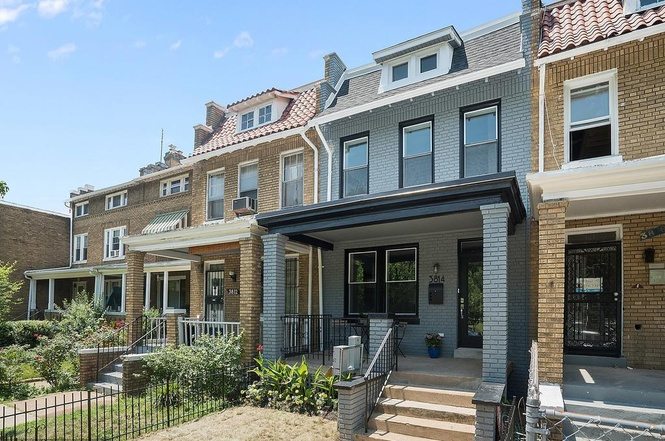
Here’s a look into one of Washington Capital Partners’ recent Washington D.C. fix and flip loans. Our borrower, Virginia, contacted Washington Capital Partners with this Petworth rowhome. She found this three-bedroom, one-bathroom home almost fully-gutted from the previous owner whose remodeling plans came to a halt. Just minutes away from a metro station, in the highly-desired neighborhood, she could see right away that this deal was absolutely perfect for a fix-and-flip opportunity.
Virginia brought this deal to
Washington Capital Partners and we
funded 80% LTC (Loan-to-Cost = purchase + construction) plus 100% of the rehab costs for this deal. Our borrower got right to work on the rehab and preformed a thorough upgrade on the property, making it a four-bedroom, three-bathroom home. The major upgrades include making it a four-bedroom, three-bathroom home, stainless steel appliances, a patio, and a deck.
Virginia did an amazing job transforming this property into one of our favorites. As someone with a full-time job, while investing on the side, Virginia
collected an estimated profit of $80,000 on this Petworth flip.
Check out what her rowhome looked like before it was totally renovated!
Rental Property Q&A with Andrew Michael

We sat down for a Q&A about rental properties with long-time rental property owner and friend of WCP, Andrew Michael.
- What are the benefits of renting versus selling?
- With renting, you have a passive income while your tenants are paying down your mortgage on the property. Plus, eventually, you will have a fully paid-off asset to sell.
- When you rent out a property you can utilize a multitude of tax right-offs. You probably want to seek guidance from a CPA to take full advantage of these.
- How do you determine which exit strategy is better?
- It starts with what your investing goals and strategies are. Renting and selling a property give you two different forms of income; with renting you receive long-term passive income, while selling gives you short-term cash infusions. Ideally, you want to find a combination of renting and flipping that provides your business with stable growth.
- Often times, location will heavily influence what your best exit strategy is. Looking at the rental clientele (Class A, B, C) versus the retail buyers should give you a good idea of which strategy will give you better results.
- As a long-time rental property owner, what are some tips for those starting out?
- I like to keep all of my rentals pretty consistent when it comes to materials. I use the same paint, flooring, and tiles when rehabbing my properties. Buying materials in bulk and keeping a stash for quick repairs has saved me a lot of time and money.
- Know your short-term and long-term business goals. Do you need a short-term cash infusion to start scaling? Are you in a position to focus on growing your rental portfolio for long-term passive income?
- Ask yourself – am I willing and able to become a landlord for rental properties? I personally hated being a landlord. It just wasn’t worth it for me – between the time consumption and added stress I quickly saw the writing on the wall. Now all of my rental properties are professionally managed and I can focus on scaling my business rather than dealing with clogged toilets.
- Take the time to properly vet your tenants. It’s tempting to just focus on getting your units filled quickly, but in my experience, it ends up costing you more money in the end. Bad tenants are notorious for causing damage to properties, so I think it’s better to protect your property by waiting an additional month or two until you find and vet tenants that will be respectful of your asset. One easy way to vet tenants is to use their credit score. People with a 620 or above typically make good tenants and often take care of smaller issues themselves.
- The notorious “2% Rule” is only a guideline for starting out. Just because a property won’t go for 2% of its purchase price in rent doesn’t mean it’s a bad deal – in fact, most properties in the DC area won’t fall under the 2% Rule. The ones that have a low enough purchase price to fit this metric are likely to be in a “war zone” area and may be more trouble than they are worth. Baltimore and Hagerstown, MD are two areas where you may find deals that fit the 2% Rule, but I’d recommend that new investors get some experience under their belts before taking on these markets.
Our Favorite Books for Real Estate Investors

Here’s a list of some of our favorite books for real estate investors. These books cover a wide variety of topics from basics of investing, to business management, and how to own all aspects of your life.
The Millionaire Real Estate Investor
The Millionaire Real Estate Investor is kind of a one-stop-shop for all things real estate investing. The book goes over a variety of topics from how to find properties to flipping, wholesaling, and rentals. While this isn’t the most colorful book, it really does a good job of covering all of the subjects that a real estate investor should be well-versed in. It kind of serves as a textbook for you to gain the basic knowledge and principles of investing.
Confessions of a Real Estate Entrepreneur
Confessions of a Real Estate Entrepreneur is a no-nonsense book outlining how to get serious about investing. This isn’t a get-rich-quick guide, it’s a realistic approach to the investing industry and how to prepare yourself for success. The author, James Randel, using a lot of good stories and real life examples from his own investing career, making it both enjoyable and useful.
Double Double
Double Double is an awesome book for those who want to scale their business and really maximize potential. The focus here is on doubling your companies profit in two years through fast growth and best practices. It touches on a lot of different topics like vision, technology, discipline, and balance. The main theme of the book is focus and applying it to everything your company does. There are tons of useful ideas for growth in the form of low-budget advertising, minimizing wasted time, and constantly analyzing your progress. I’d say Double Double is one of the best overall business management books out there.
Rich Dad Poor Dad
Rich Dad Poor Dad is an excellent book to motivate beginners. The author tells his own story about the two most influential men of his childhood – his father and his best friend’s father. His own father was poor member of the rat race with no financial literacy. His friend’s father, on the other hand, is a self-motivated business man who has a thorough knowledge of accounting, taxes, and overall money management (despite having no formal education). Throughout the book the author echoes the themes of financial literacy, taking control of your own business, and success through disciplined and fearless practices.
Living with a SEAL
Living with a SEAL is a great read about how living and being trained by a Navy SEAL changed Jesse Itzler’s life. Jesse is a successful entrepreneur, endurance athlete, and former rapper who will give anything a try. He hires a Navy SEAL to live with him for a month and train him to be better in all aspects of his life, not just physical fitness. There’s a ton funny moments as well as very significant takeaways about owning every aspect of your life and pushing yourself to the absolute limit.
Neighborhood Spotlight – Investing in Anacostia
“In 10 years the whole waterfront will be completely unrecognizable, but the rest of Anacostia will just take time.” – Jared Fausnaught, Director of Sales
Anacostia – a less-commercialized DC neighborhood previously known for crime now holds the 2016 DC Curbed Trophy for neighborhood of the year. This historic Southeast neighborhood, located East of the Anacostia River, was given the winning title for being “more than just a perfect place for eating, hanging out, and expecting big developments.”
After researching the area paired with a conversation with WCP’s Director of Sales, Jared Fausnaught, we’ve created a short-list for how promising the Anacostia neighborhood is for investors:
The real estate research firm ATTOM Data Solutions released its Q1 2017 U.S. Home Flipping report including Anacostia as one of the Hottest Home Flipping Zips. Here are the statistics:
- Q1 2017 Home Flipping Rate (pct of sales) 18.3%
- Average Days to Flip – 185
- Flipping Gross Profit – $165,000
- Flips – 15
- Gross ROI – 100%
- Realty Trac – Hottest Home Flipping Zips in Q1 2017
Right now, the development west of the river is traveling into Anacostia, beginning at the waterfront. There are a lot of investing opportunities. That’s why it’s so prime for people to get in before all of the prices get jacked up.
“For people looking to invest – expect to see higher increasing values close to the waterfront area and metro stations. Right now, the value is in the waterfront.” Jared, Director of Sales
One setback is that residents still have to travel out of Anacostia to neighboring areas for shopping and groceries. Anacostia is a neighborhood that is still lacking the basics, leaving an open opportunity for national retailers to move in and capitalize on the influx of new residents from development on the waterfront. A new Walgreens opened in September and they did receive a Little Caesars in 2015 but there are no other national retailers with establishments in the area. Due to the flipping market income levels are beginning to rise so we are expecting retail to follow suit.
“It’s all starting on the water line and will only creep further into the neighborhood.” – Jared, Director of Sales
We agree with DCCurbed for awarding Anacostia the neighborhood of 2017 because there’s tons of investing going into the area including the plans for the elevated park and mixed-used businesses. The area is only increasing in attractiveness to borrowers and home buyers. Busboys and Poets is a restaurant, bookstore, lounge, and theater with 4 other locations in DC, Maryland, and Virginia.
Read More. UrbanTurf reported that the 11
th Street Bridge is scheduled to be
completed mid-2019. The Office for Metropolitan Architecture (OMA) and the landscape – architecture firm OLIN Studio designed this multi-purpose bridge as a link for pedestrians from the Navy Yard and Anacostia and a communal space for performances, kayaking, art, and a environmental education center.
Read More. The building of a mixed-use project spanning 150 million square feet. The 9 buildings created will include, 481 residential units, 945,000 square feet of office space, and 144,000 square feet of retail space. Construction start date has not been released.
Read More.
How to Handle Multiple Flips at Once

Most real estate investors start off small by taking on one flip at a time, resulting in just a handful of projects a year. After seeing some success in their flips, many reach a point where they are ready to scale their business by taking on multiple flips at once. While this may seem intimidating to some, fear not! Managing multiple flips at once can be done with relative ease if you have the right preparation and systems in place.
Funding
The first question you may ask when considering going in on an additional flip is, “can I afford to purchase another property?” Securing funding is the first step toward tackling multiple flips. You have a couple of options if you either have some sort of private source of capital, or currently have at least 1 project in their name.
- Find an equity partner
- Seeking out an equity partner can give you the capital for either the down payment needed to secure a property via a lender, or (if you can find one) a partner who can cover the additional capital needed to purchase the property in cash. Sources for equity partners could be your friends, family, and other investors that you can meet through a variety of networking platforms (like our CAZA Investor Group Meetup) designed to bring partners together.
- Refinancing
- If you have at least one flip that is complete and currently on the market, you can use refinancing services (like ours) to leverage your current property in order to secure funding for another deal. This is commonly called “cash-out” refinancing and is often used by investors to create a continuous stream of projects while eliminating lag time between the sales of their properties. Essentially – you get more paydays, faster.
Managing the Construction
Depending on your level of experience, and the time you can allocate to construction management, checking in on multiple properties in person will help you keep on top of things. For those who have never managed multiple projects at once – it is probably wise to delegate these day-to-day management duties to a general contractor or project manager. But before selecting a general contractor there is some significant vetting that needs to be done.
- Bandwidth for Multiple Projects
- It’s always best to know the experience level of a contracting crew before committing to one. Some crews may be great at handling single projects, but have zero experience scheduling multiple projects at once, making them a gamble. Additionally, it’s important to know the scope of their crew – can they do everything from light renovations to ground-up construction? Depending on the types of properties you are flipping, diversity of experience may or may not be important to you.
- Another great question for multi-property flippers to ask contractors is – “how many crews do you have available?” If only one crew is available to handle multiple flips, they could be spread too thin and delay your construction schedule. In this scenario, you could either hire on another general contractor, or just look for a single contractor with more than one crew.
- Licensing is important, so be sure to ask if company is licensed to work in the state(s) that your flips are located in.
- It’s always better to use a contractor who is both willing and able to sign a lien release form so that there is a written agreement in place should things go wrong down the road.
- Construction money management can be a murky area with some contractors, so be sure to know what type of system a crew uses to correctly document and allocate money, while also preventing co-mingling of funds with their other clients.
Once you have found the right contractor crew for your flips, don’t make the mistake of becoming an absentee investor. Regularly walking your flips is crucial even after hiring a general contractor in order to prevent problems and clarify any questions. We always recommend rewarding a crew when they do a good job. Something as simple as buying the crew lunch can maintain a prosperous business relationship and result in high quality of work.
Draw Management
If you have secured funding for your multiple flips through a lender, you may be receiving your rehab funds via a draw schedule. This means that funds are released in portions based upon the milestones that your projects reach. Having a detailed draw schedule will keep both you and your contractors on the same timetable and prevent your project from falling behind.
Money Management
Never let your books get sloppy! This task becomes more difficult as you add multiple flips into the mix, but developing systems of organization and money management will help big time. At the very least you should be employing proven money management software (Quickbooks or a well constructed Microsoft Excel Spreadsheet should do the trick). If you find that your financing needs more attention than you can deliver yourself, consider hiring on a bookkeeper to keep your books clean and your sanity intact.
Selling Smart
If you have several flips going on market at the same time, its probably in your best interest to seek out a real estate agent who has the backing of a full team to help carry the workload. Don’t get bogged down at the finish line by overloading an agent who doesn’t have the time or capacity to heavily market and show each property. Its always fair to ask, “how do you plan on marketing multiple homes at once?”
Rinse and Repeat
So your flips are on the market, ready for a buyer. What now? Refinance! Using the same method that we discussed earlier you can use cash-out refinancing to leverage these on-market properties. This will keep the cycle going and keep your invested money actively increasing your wealth.
Have any questions about finding the right contractors and agents? We have worked with tons of local professionals who we would be happy to put you in contact with. Just give us a call at 703.348.0549 or email at info@wcp.team.
Driving for Dollars 101 – Part 2
A complete breakdown including: what to prep, what to look for, and how to follow-up when Driving for Dollars:
What to do Before:
Do some digging to find out where other investors are flipping and what areas are trending. Decide what neighborhood you want to focus on, and map out where you want to drive.
When to go Driving for Dollars – Best Opportunities:
You can go driving for dollars whenever you have the opportunity, but here are a few instances that make spotting vacant and distressed properties easier:
- Vacant houses are easiest to spot in the Spring due to lack of lawn care
- Trash pickup day – houses that fail to put out their trash cans
- Weekdays allow for less traffic, letting you drive slower and take your time observing
- Phonebook delivery day
- Holidays – houses with no decorations
Packing List:
- Camera
- Paper and pen to collect property address and observations
- A friend or family member to drive
- Print out of the area you plan to drive through
What to look for:
Now the fun part! Time to channel your inner Sherlock Holmes when observing the property in question.
- No decorations
- Neglected yard
- Boarded up/broken windows
- Mail pile up in mailbox or porch
- Piled up newspapers
- Doorhangers left on porch
- Leaves and trash on property
- Condemned sticker or county notification
- No cars in driveway
- People walking by – find out what’s going on with the property, they might know the owners
What to do After You See a Vacant/Neglected Property:
- Write down the address and any details (ex: poor roof)
- Take a picture
- Leave a door hanger or flyer expressing your interest in buying the house
You Finished Driving, Now What?
- Go home and research the properties you wrote down, on your local MRIS
- Remove any properties that do not fit your criteria
- Find the owner via tax records and prepare your postcards and letters.
- You can put in a Freedom of Information Act (FOIA) request to see evictions for a whole year – owners of these properties may be more willing to sell their property after a bad experience.
Hard Money Loan Documents – Close Faster

In this week’s Minute Monday, Sales Associate, Joska Gal will take you through the hard money loan documents you should have prepared to make closing fast and easy.
Information and Documents Needed:
- Signed Term Sheet
- Commitment Fee Payment
- Our commitment fee varies from deal to deal but is typically around $1,400. This includes the attorney fees and appraisal fees.
- Borrower Information – Full Name, Address, Birthdate, SSN (of all LLC members), Purchase and Sale Agreement
- W-9 for Purchasing LLC
- Employer Identification Number (EIN) for Purchasing LLC
- Article of Organization for Purchasing LLC
- Hazard/Liability Insurance Certificate
- This is required for all of our deals. If the property is undergoing renovation, then there needs to be a builder’s policy in place.
- Bank Account Information
- Access for our inspector to take pictures of the interior and exterior of the property
- Two of your most recent Tax Returns (i.e. 2015, 2016)
Have questions about our requirements? The WCP Sales Team is available to offer expertise, knowledge, and financing to help you close your deal. Contact us today!
For weekly videos about hard money lending, real estate investing, and more!
Driving for Dollars 101 – Part 1

Driving for dollars is a fun way to get familiar with an area, make connections with locals, and most importantly find investment properties. Here’s a short Q & A with our Sales Director, Jared to get you familiar with how DFD works:
Q: What is Driving for Dollars?
A: Driving for dollars is driving in neighborhoods, searching for and gathering information on potential investment properties.
Q: How would you describe a typical day DFD?
A: I wake up early, get coffee, bring a friend and get excited to try and find properties. Once I get out to the neighborhood I take my time finding properties and talking to people on the street trying to get more information on the neighborhood, it honestly feels like a treasure hunt.
Q: When do you go?
A: I go on the weekends. I’ll typically spend my whole morning DFD if I commit to an entire neighborhood.
Q: How do you decide what neighborhood you want to drive through?
A: Prior to going out, I do some research on which areas are trending. It’s a good sign if there are other flips in the neighborhood, meaning there will be more comps.
Q: How do you measure the success of DFD?
A: It was a successful morning if I kept good notes, got leads from observations, talked to people on the street (mail carriers know a lot about a neighborhood F.Y.I), and isolated the houses I want to contact.
Q: How much success have you had DFD?
A: A lot – I’ve ended up buying quite a few deals that I found DFD. However, it can take a little while waiting for responses from property owners.
Q: Do you always bring someone along with you or do you often go alone?
A: I usually like to bring someone with me. It makes it easier to take pictures, notes, and drop off flyers quickly.
Q: How do you contact the owner to buy their property?
A: In the past I’ve used postcards, flyers, or letters in the mail.
Q: Have you ever had any awkward encounters while DFD?
A: Yes, it happens! I’ve dealt with rude people and even dogs chasing me, but it’s just a part of the experience. You just have to laugh it off if something weird happens.
Q: Do you have any tips for newbies?
A: Have fun with it. Don’t spend all of your time DFD because this is only one of the many strategies you should be using to finding properties. You need to be using as many tactics as you can to find really great deals.
Hiring a Contractor? Know These Red Flags

Sales Executive, Andrew Michael discusses 4 Red Flags to watch out for when hiring a contractor:
- To kick things off, you should check the contractor’s online reviews. If they have mainly negative reviews or have no reviews at all, it’s typically better not to take a gamble on them.
- Secondly, if you are getting quotes from a contractor and their projections are unrealistic or if they are asking for an unnecessary amount of time or materials – this is not the right contractor for the job.
- Third – you might run into a contractor that is asking for a large amount of money up front. Anything more than 15% of the project cost might suggest that they are using that money for something other than your project.
- Last but not least, if your contractor is not promptly getting permits, it’s time to ditch them for someone who will do their due diligence.
Thanks for tuning in for this week’s Minute Monday, we’ll see you next week!
For weekly videos about hard money lending, real estate investing, and more!
Introduction to the CAZA Investor Network

We’ve all heard the phrase, “it’s not what you know, it’s who you know”
Lucky for you, Washington Capital Partners hosts a monthly Meetup where you can receive both new connections and investing knowledge. Since 2007, the
CAZA Investor Network has made it easier for agents, contractors, investors, and newcomers to share strategies, experiences, and most importantly network!
So now you ask, what’s the price for the CIN Falls Church Meetup? FREE. As an affiliate, we share our knowledge and best practices to help our attendees grow their personal investment portfolios.
More good news – there are multiple CAZA Investor Network Meetups held in different cities, which means more contacts! This month we were invited to be on the panel at the CAZA Reston Meetup. The topic being “Where to Find The Money,” we shed some light on the various reasons investors should consider coming to a hard money lender over traditional banks, partnerships, etc. Here are a few key-takeaways from the Meetup that are important for anyone considering either a traditional bank or hard money lender for their next investment project:
1 – Traditional bank terms and timing are not conducive to investors. It is rare for banks to make loan on rehabs (the houses themselves rarely qualify.)
2 – When you come to Washington Capital Partners with a deal, think of us as your “second set of eyes.” We can analyze your deal and exit strategy in as little as one hour, giving you a realistic image of your profits.
3 – Many people are hesitant to consider hard money lending because of high interest rates. But it is equally important to understand that the cost of the loan including the rates are directly related to the risk taken by the lender.